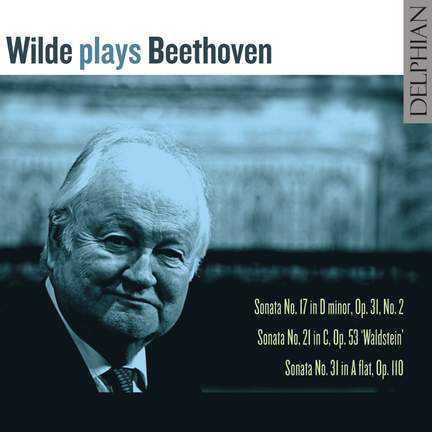
Wilde plays Beethoven
David Wilde (piano)
As on earlier Delphian discs from Wilde, the ear is seduced by his beautiful tone (the piano he uses and his technician quite rightly receive a credit), and try the adagios of 'The Tempest'...
Wilde plays Beethoven
David Wilde (piano)
Purchase product
As on earlier Delphian discs from Wilde, the ear is seduced by his beautiful tone (the piano he uses and his technician quite rightly receive a credit), and try the adagios of 'The Tempest'...
About
These three piano sonatas outline a progression from the despair of the Piano Sonata No. 17 in D minor, Op. 31, No. 2, written at the same time as the start of the famous ‘Heiligenstadt Testament’, when Ludwig van Beethoven’s realisation that his deafness was complete and permanent drove him to contemplate suicide, via his courageous fight back, brilliantly expressed in the irrepressible optimism of the Piano Sonata No. 21 in C, ‘Waldstein’, Op. 53 towards the lofty spiritual aspirations of the Piano Sonata No. 31 in A flat, Op. 110.
50 years after his victory in the International Liszt-Bartók Piano Competition David Wilde’s masterful interpretations are the fruit of a lifetime’s experience of studying and performing these towering masterpieces.
Contents and tracklist
Awards and reviews
 June 2011
As on earlier Delphian discs from Wilde, the ear is seduced by his beautiful tone (the piano he uses and his technician quite rightly receive a credit), and try the adagios of 'The Tempest' and A flat sonatas for playing of masterly, hushed introspection that makes you hold your breath. Three well-contrasted works presented with deep insight and understanding - and without any distracting idiosyncracies - the result of experience and long familiarity.
 July 2011
This thought-provoking recital unites three sharply contrasted Beethoven sonatas...[Wilde's] own descriptions in his finely detailed essay are eloquently expressed in performances of an exceptional individuality...Speculative and original, these performances prompt all listeners to reconsider and think again, and they have been excellently recorded.
 25th March 2011
Wilde brings maturity to his treatment of the "Sonata No. 17 in D minor": the melancholy fatalism of the adagio is alleviated by his thoughtful touch. And there's a brilliant momentum to the opening allegro of the "Sonata No. 21 in C", which is replaced by the almost completely static Adagio Molto, which hangs like a sea-mist through which the concluding Rondo is approached. Superb.
 20th April 2011
central to each performance is a singular lack of pretensions and self-indulgence...Wilde imbues the Waldstein with a natural majesty and poetic presence; he captures the dark questioning of the D minor Sonata, Op31 No2, with magnetic insistence; and rounds off this compelling disc with a mellifluous but powerful reading of the A flat sonata, Op110. Unpolluted Beethoven, and all the better for it.
classicalsource.com 19th April 2011
A Beethoven recital with a flavour all its own. We owe a debt to Delphian for keeping us in contact with a pianist such as David Wilde, whose experience and twinkle-in-the-eye enthusiasm are much in evidence...The sound is not the richest, but the piano's immediacy and rugged power is gratifying as well as being echt for this composer, the instrument's wiry undiluted timbres appropriate to David Wilde’s unvarnished and penetrating performances.