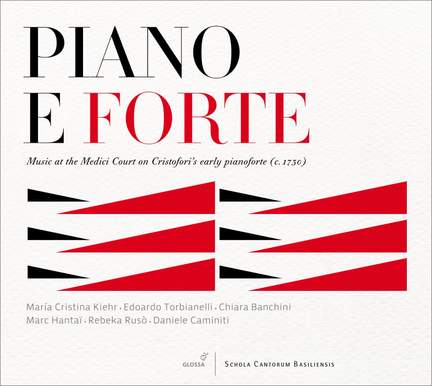
Piano e forte
Music at the Medici Court on Cristofori’s early pianoforte (c. 1730)
María Cristina Kiehr (soprano), Edoardo Torbianelli (cimbalo di marteletti pianoforte), Chiara Banchini (violin), Marc Hantaï (traverse), Rebeka Rusò (viola da gamba) & Daniele Caminiti (theorbo & archlute)
[Marcello's] writing is melodious, eccentric and profoundly expressive and the subtle dynamic flexibility of the Cristofori...suits their elegant swooning lines very well. They are also Kiehr's...
Piano e forte
Music at the Medici Court on Cristofori’s early pianoforte (c. 1730)
María Cristina Kiehr (soprano), Edoardo Torbianelli (cimbalo di marteletti pianoforte), Chiara Banchini (violin), Marc Hantaï (traverse), Rebeka Rusò (viola da gamba) & Daniele Caminiti (theorbo & archlute)
Purchase product
[Marcello's] writing is melodious, eccentric and profoundly expressive and the subtle dynamic flexibility of the Cristofori...suits their elegant swooning lines very well. They are also Kiehr's...
About
Central to any recording bearing the Schola Cantorum Basiliensis’ imprimatur is that there should be a very good (musicological) detective story behind it and this Edoardo Torbianelli-led programme of Piano e forte is no exception. Existing thinking deems that the fortepiano was hardly a prevalent instrument in Italy in the 18th century at all, in terms of music written for it or suitable instruments being available. However, based on the work of Renato Meucci, Kathrin Menzel and Torbianelli the spotlight is on the figure of Bartolomeo Cristofori and his building of early pianofortes for the Medici Court in Florence. This was towards the end of that formidable dynasty – the 1730s – but Cristofori was active enough also to encourage composers such as Alessandro Marcello, Veracini and Alessandro Scarlatti to write for this instrument : much softer in sound than a grand piano but with that steplessly variable transition from very soft to loud which was a great novelty for stringed keyboard instruments of the time. Demonstrating the musical and technical qualities of the results are internationally-recognised performers soprano María Cristina Kiehr, violinist Chiara Banchini and flautist Marc Hantaï. They join Edoardo Torbianelli, gambist Rebeka Rusò and theorbist Daniele Caminiti, in a sparkling array of ariettas, serenatas and sonatas for keyboard and other instruments, portraying the richness of Italian musical life in the first half of the 18th century.
Contents and tracklist
- Edoardo Torbianelli (piano)
- Marc Hantai (flute)
- Schola Cantorum Basiliensis
- Marc Hantai (flute), Edoardo Torbianelli (piano)
- Edoardo Torbianelli (piano), Chiara Banchini (violin)
- Edoardo Torbianelli (piano)
Awards and reviews
 April 2011
[Marcello's] writing is melodious, eccentric and profoundly expressive and the subtle dynamic flexibility of the Cristofori...suits their elegant swooning lines very well. They are also Kiehr's most successful pieces on the disc. Her voice is suave and confident...and she has an unerring insight into the emotional core of each cantata.