Palestrina: Choral Works
Pro Cantione Antiqua, Mark Brown & Bruno Turner (directors)
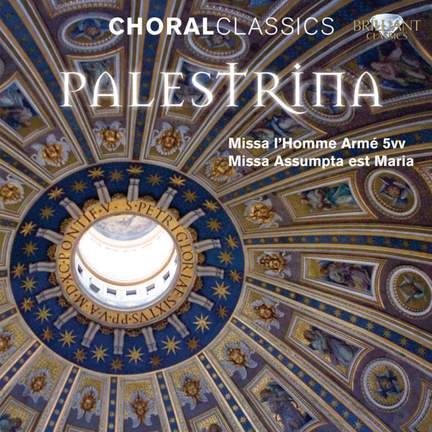
The final Agnus is especially beautiful with its added voice in the middle of the texture. Further recordings of this work are unlikely to displace the all-male, solo-voice approach advocated...
Palestrina: Choral Works
Pro Cantione Antiqua, Mark Brown & Bruno Turner (directors)
Purchase product
The final Agnus is especially beautiful with its added voice in the middle of the texture. Further recordings of this work are unlikely to displace the all-male, solo-voice approach advocated...
About
Giovanni Pierluigi da Palestrina is one of the towering figures of Rennaissance and he ranks today as one of the great composers. His output of over 100 masses, 250 motets and several volumes of liturgical works is remarkable even by the standards of the day.
Nearly all his music was composed for the Papal choir, and the fact that he remained closely within the orbit of the Vatican marks him out as a conservative musician. However, his music moved away from the mainly contrapuntal style, to one that displayed much skillful use of chordal and harmonic writing. He shunned the use of giving equal importance to words and music, preferring to set the texts in an impersonal often quite abstract idiom which nonetheless has a beauty of melodic line and use of harmony that few could equal. This set of 5CDs contains 6 Masses including the masterpiece Missa Papae Marcelli, the Lamentations of Jeremiah the Prophet, and a Stabat Mater.
These CDs are a superb introduction to the music of a great composer who dominated 16th century Italian music.
Booklet with sung texts.
Contents and tracklist
- Pro Cantione Antiqua
- Mark Brown
- Pro Cantione Antiqua
- Mark Brown
- Pro Cantione Antiqua
- Mark Brown
- Pro Cantione Antiqua
- Mark Brown
Awards and reviews
 October 1994
The final Agnus is especially beautiful with its added voice in the middle of the texture. Further recordings of this work are unlikely to displace the all-male, solo-voice approach advocated here.The plainchant relevant
to each Mass is beautifully rendered and unobtrusive, and the recording has a full presence but is not too close.