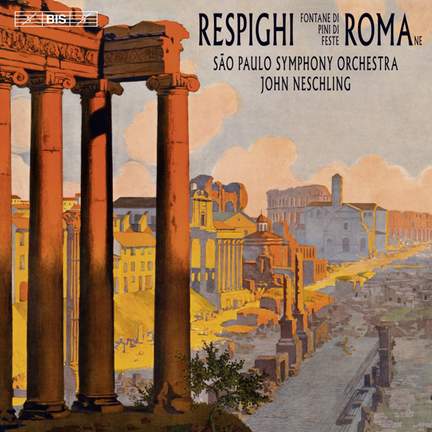
Respighi: Roman Trilogy
São Paulo Symphony Orchestra, John Neschling
Rarely has this music sounded so well on CD...The Trevi fountain dénouement and climax section of Pines let rip, but Neschling also unearths startling subtleties. Festivals tends to be played...
Respighi: Roman Trilogy
São Paulo Symphony Orchestra, John Neschling
Purchase product
Rarely has this music sounded so well on CD...The Trevi fountain dénouement and climax section of Pines let rip, but Neschling also unearths startling subtleties. Festivals tends to be played...
About
Respighi’s Roman Trilogy (the tone poems Pines of Rome, Fountains of Rome and Roman Festivals) holds a very special place in the orchestral repertory, challenging almost any other composition for sheer sonic audience appeal.
Contents and tracklist
Work length16:50
I. La fontana di Valle Giulia all'alba
Track length4:54
II. La fontana del Tritone al mattino
Track length2:41
III. La fontana di Trevi al meriggio
Track length3:47
IV. La fontana di Villa Medici al tramonto
Track length5:28
Work length21:55
I. I pini di Villa Borghese
Track length2:41
II. I pini presso una catacomba
Track length6:55
III. I pini del Gianicolo
Track length7:40
IV. I pini della via Appia
Track length4:39
Work length24:51
I. Circenses
Track length4:47
II. Giubilio
Track length6:21
III. L'Ottobrata
Track length8:01
IV. La befana
Track length5:42
Awards and reviews
 February 2011
Rarely has this music sounded so well on CD...The Trevi fountain dénouement and climax section of Pines let rip, but Neschling also unearths startling subtleties. Festivals tends to be played as a blunt crowd-pleaser, but Neschling is careful to emphasisie the push-pull rhythmic contrasts of the finale and incidental details...The best Roman trilogy of recent times.
 March 2011
It may seem bold of BIS to rely on a relatively untried orchestra and its Brazilian conductor but such confidence has amply paid off...The spectacular BIS recording in SACD brings out all the atmospheric qualities
 January 2011
A criticism often levelled at the sequence is that the works themselves tend to become more ostentatious as they proceed: to which end, John Neschling's ample textural refinement and rhythmic incisiveness is its own justification.