Special offer. Sufi/Bach: Orient Meets Occident
Eva Oltiványi (soprano), Roswitha Müller (alto), Simon Witzig (tenor), René Perler (bass), Stephen Smith (chamber organ), Jan-Martin Mächler (tenor), Marcus Niedermeyr (bass)
Sufi-Ensemble, Die Freitagsakademie
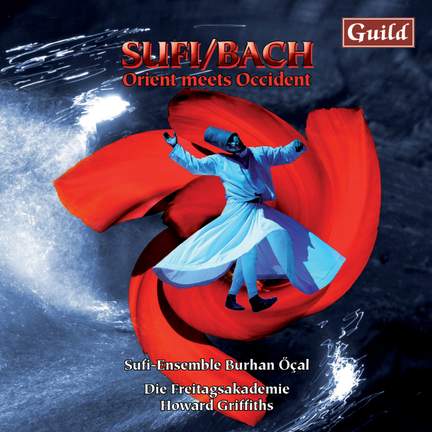
Special offer. Sufi/Bach: Orient Meets Occident
Eva Oltiványi (soprano), Roswitha Müller (alto), Simon Witzig (tenor), René Perler (bass), Stephen Smith (chamber organ), Jan-Martin Mächler (tenor), Marcus Niedermeyr (bass)
Sufi-Ensemble, Die Freitagsakademie
Purchase product
About
The Pocket Opera Company’s SUFI/BACH summer concerts as part of the 2008 Zurich festival presented a unique encounter between orient and occident on a musical level: Sufi songs (with dervish dancing) and Bach’s cantatas BWV 93 and 107. Orthodox Islam as well as some Christians are weary of the inherent power of music to elicit sensual pleasure and thus subjugate the power of the word. Thus, Saint Hieronymus rejected singing as the making of the devil. His view was defeated, however, by Saint Ambrosias, who introduced music, an angelic art, into liturgy, as a means to express the inexpressible. Islam, however, to this day includes the Order of the Sufi which is dedicated to music and consciously uses the power of music to elicit trance and ecstasy as a religious practice, thus allowing for pleasure and sensual experience. The famous circular dance of the Dervish is an example of this. By juxtaposing both forms of music, riveting the Zurich audiences in the fully packed church, we explored both commonalities and differences between Islam and Christianity while discovering a similarly mystical effect of music in approaching spirituality in both religions. Our production explored the possibility of transporting the idealised word of both religions into a sensual experience, even achieving ecstatic effects with Bach’s formally strict cantatas.
Contents and tracklist
- Eva Oltiványi, Roswitha Müller, Marcus Niedermeyr, Jan-Martin Mächler
- Chor, Die Freitagsakademie
- Howard Griffiths
- Sufi Ensemble, Chor, Die Freitagsakademie
- Howard Griffiths
- Sufi Ensemble, Chor, Die Freitagsakademie
- Howard Griffiths
- Sufi Ensemble, Chor, Die Freitagsakademie
- Howard Griffiths
- Sufi Ensemble, Chor, Die Freitagsakademie
- Howard Griffiths
- Sufi Ensemble, Chor, Die Freitagsakademie
- Howard Griffiths
- Sufi Ensemble, Chor, Die Freitagsakademie
- Howard Griffiths
- Sufi Ensemble, Chor, Die Freitagsakademie
- Howard Griffiths
- Sufi Ensemble, Chor, Die Freitagsakademie
- Howard Griffiths
- Eva Oltiványi, Jan-Martin Mächler, Marcus Niedermeyr
- Chor, Die Freitagsakademie
- Howard Griffiths