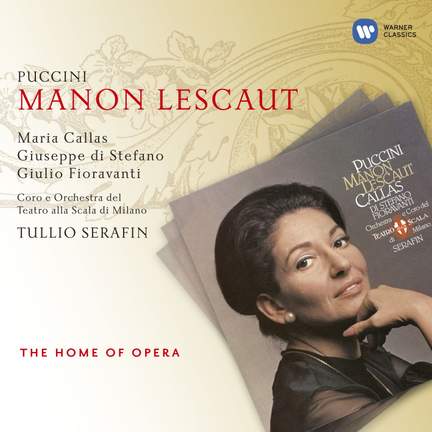
Puccini: Manon Lescaut
Maria Callas (Manon), Giuseppe Di Stefano (Des Grieux), Giulio Fioravanti (Lescaut)
Orchestra e Coro del Teatro alla Scala di Milano, Tullio Serafin
Callas catches the development of Manon's character from naive acquisitiveness to desperation with unfailing insight. Di Stefano makes a worthy Des Grieux, and Serafin is the most reliable of...
Puccini: Manon Lescaut
Maria Callas (Manon), Giuseppe Di Stefano (Des Grieux), Giulio Fioravanti (Lescaut)
Orchestra e Coro del Teatro alla Scala di Milano, Tullio Serafin
Purchase product
Callas catches the development of Manon's character from naive acquisitiveness to desperation with unfailing insight. Di Stefano makes a worthy Des Grieux, and Serafin is the most reliable of...
About
The mid-price collection presents some of the most important and admired recordings of the EMI Classics and Virgin Classics catalogue which make EMI - The Home of Opera.
Bonus Disc contains synopsis and libretto with translation.
Contents and tracklist
- Vito Tatone (tenor), Giuseppe Morresi (bass), Maria Callas (soprano), Giulio Fioravanti (bass-baritone), Franco Ventriglia (bass), Franco Ricciardi (tenor), Franco Calabrese (bass), Fiorenza Cossotto (mezzo-soprano), Carlo Forti (bass), Dino Formichini (tenor), Giuseppe di Stefano (tenor)
- Teatro alla Scala
- Tullio Serafin
- Recorded: 1957-07-27
- Recording Venue: 18-27 July 1957 / Teatro alla Scala, Milan
Manon Lescaut, ATTO SECONDO / ACT 2 / ZWEITER AKT / DEUXIÈME ACTE: Oh, sarò la più bella! (Manon / Des Grieux)
Track length8:24
Sola, perduta, abbandonata (Manon / Des Grieux)
Track length5:12
This track is only available as an album download.
Awards and reviews
 March 2011
Callas catches the development of Manon's character from naive acquisitiveness to desperation with unfailing insight. Di Stefano makes a worthy Des Grieux, and Serafin is the most reliable of Puccini conductors.

Callas may present a rather formidable portrait of a young girl in Act 1, but here the final act is far more than an epilogue to the rest, rather a culmination, with Callas at her very peak. Di Stefano too is in superb form and Serafin’s pacing of the score is masterly.
 January 2011
Callas, as always, takes a completely individual approach to this opera...it certainly demands attention...this recording has plenty going for it, not only from Callas but also the sterling (if not exactly subtle) contribution of Di Stefano, and Serafin's idiomatic conducting.