Purcell: Dido and Aeneas
Solenn’ Lavanant Linke (Dido), Alejandro Meerapfel (Æneas), Yeree Suh (Belinda), Fabián Schofrin (Sorceress), Mariana Flores (Second Witch, Second woman), Magali Arnault (First Witch), Christophe Carré (Spirit of the Sorceress) & Valerio Contaldo (Sailor)
La Nouvelle Ménestrandie &...
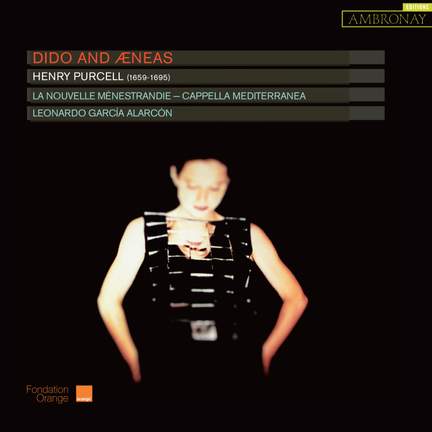
Solenn' Lavanant Linke's voluptuous, volatile voice is a thrilling find for the unhinged Dido...Fabian Schofrin's Sorceress is outrageous, his two witches sounding like they've inhaled helium.
Purcell: Dido and Aeneas
Solenn’ Lavanant Linke (Dido), Alejandro Meerapfel (Æneas), Yeree Suh (Belinda), Fabián Schofrin (Sorceress), Mariana Flores (Second Witch, Second woman), Magali Arnault (First Witch), Christophe Carré (Spirit of the Sorceress) & Valerio Contaldo (Sailor)
La Nouvelle Ménestrandie &...
Purchase product
Solenn' Lavanant Linke's voluptuous, volatile voice is a thrilling find for the unhinged Dido...Fabian Schofrin's Sorceress is outrageous, his two witches sounding like they've inhaled helium.
About
Dido and Æneas was created in private surroundings at Josias Priest’s School for Young Gentlewomen in Chelsea. Intended as it was for an amateur setting, Dido is conspicuous for the simplicity of its resources: an all female cast, an absence of vocal virtuosity, instrumental forces restricted to strings, and the modest contrapuntal elaboration of the choruses. The date of its first and only performance (1689) before its revival in the 20th-century speaks volumes about the English distrust of the new genre! How times have changed: Dido’s lament ‘When I am laid in earth’ was recently voted the nation’s favourite aria.
“As far as our performance is concerned, I thought it appropriate to expand the instrumental forces to include wind, as was customary at the time, especially for French operas. I also wished to preserve the sometimes intimate character of the typical English consort of four or five instruments. The lyra viol is used to accompany some of the recitatives, notably the laments. Considerable research on the relationship between text and intervals in Purcell’s writing showed us the way towards discovering the sweetness of ninths, the rage of fourths, the muffled sonorities produced by sixths, the feeling of peace a third leaves behind it, the clear-sighted audacity of a second, the torment of a diminished seventh, the restfulness of a minor seventh and the strength of conviction of an octave, not to mention the false relations which one is more used to finding on the Iberian peninsula. Thus a whole world of colours blossoms in the texts of Nahum Tate, just as the words of Alessandro Striggio had introduced Monteverdi into a new universe when he was composing L’Orfeo. In conclusion, I felt our interpretation should emphasise the importance of reassessing Dido and Æneas as a piece conceived for performance by young singers. Our project reflects the shared desire of a conservatory in Geneva and an ensemble of musicians to join forces to perform a work which is difficult to get to grips with yet was above all written for simple people in an almost domestic context who were unfamiliar with the world of opera and unaware of the important role with which history was entrusting them.” Leonardo García Alarcón
Based by the dramatist Nahum Tate on the fourth book of Virgil’s Aeneid and his own Brutus of Alba, or The Enchanted Lovers (1678), the libretto relates the tragic love story of Dido, seduced and abandoned by Æneas when he leaves Carthage to found Rome. Tate departs from Virgil on two points: he substitutes witches for the divinities of Olympus, and reserves a kinder death for Dido, who instead of falling on her sword perishes of grief on her lover’s departure.
Artists
Solenn’ Lavanant Linke (Dido), Alejandro Meerapfel (Æneas), Yeree Suh (Belinda), Fabián Schofrin (Sorceress), Mariana Flores (Second Witch, Second woman), Magali Arnault (First Witch), Christophe Carré (Spirit of the Sorceress) & Valerio Contaldo (Sailor)
La Nouvelle Ménestrandie & Cappella Mediterranea, Leonardo García Alarcón (direction)
Contents and tracklist
- Leonardo García Alarcón, La Nouvelle Menestrandie
- Solenn Lavanant Linke, Mariana Flores, Alejandro Meerapfel, Yeree Suh, La Nouvelle Menestrandie, Leonardo García Alarcón, Cappella Mediterranea
- Magali Arnault, Mariana Flores, Yeree Suh, Solenn Lavanant Linke, Alejandro Meerapfel, Christophe Carré, Fabián Schofrin, Leonardo García Alarcón, La Nouvelle Menestrandie, Cappella Mediterranea
- Valerio Contaldo, Magali Arnault, Yeree Suh, La Nouvelle Menestrandie, Mariana Flores, Alejandro Meerapfel, Leonardo García Alarcón, Cappella Mediterranea, Fabián Schofrin, Solenn Lavanant Linke
Awards and reviews
 April 2011
Solenn' Lavanant Linke's voluptuous, volatile voice is a thrilling find for the unhinged Dido...Fabian Schofrin's Sorceress is outrageous, his two witches sounding like they've inhaled helium.
 January 2011
[Alarcón] has a proper sense of style and his orchestra turns in neat and accomplished playing...Solenn’ Lavanant Linke has a curiously metallic tone: uningratiating at first, but one soon gets used to it and by the time of the Lament she is very moving.
 December 2010
it is clearly a performance full of fun, and if the performers sometimes overstep the mark...their youthful enthusiasm for the music and the freshness they bring to it are enormously compelling...[The Lament] is delivered with immaculate poise, beautiful restraint and not only real technical mastery but a leve of musical maturity which defies [Linke's] tender years.
 3rd October 2010
From many points it is an ideal realisation of Purcell's tight-knit masterpiece, with young voices, a small instrumental ensemble, lively tempi and transparent textures...it proves the continued vitality and international reach of Purcell's mini-opera.