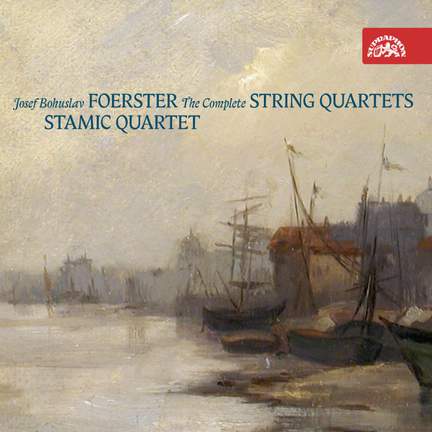
Foerster: The Complete String Quartets
Stamic Quartet
Foerster’s little-known chamber oeuvre comes as a revelation, especially in performances as committed as these. The Bohemian melodic inspiration is unmistakable, as is the autumnal wistfulness...
Foerster: The Complete String Quartets
Stamic Quartet
Purchase product
Foerster’s little-known chamber oeuvre comes as a revelation, especially in performances as committed as these. The Bohemian melodic inspiration is unmistakable, as is the autumnal wistfulness...
About
Following the acclaimed recordings of the two violin concertos (SU39612) and the cello concerto (SU39892), Supraphon returns to the work of Josef Bohuslav Foerster, a composer somewhat neglected until recently. This double CD presents for the first time his complete string quartet oeuvre. The first quartet (1888) is dedicated to Tchaikovsky, who recognised in Foerster a talented music creator and in a letter encouraged him to persevere with composing.
The form of string quartet would subsequently accompany Foerster until the very end. The fifth quartet, “The Vestec” (1959), is Foerster’s final work. After a long and arduous creative journey and seeking, he returns in it to his Smetana and Dvorák roots, already evident in the first quartet. This recording is supplemented by three minor compositions (including Erinnerung for string quartet and harp) and the idiomatic two-movement string quintet with double bass. Stamic Quartet, one of the foremost ensembles representing the renowned Czech quartet school worldwide, interprets Foerster with technical mastery and an understanding of the deeper layers of his work.
Contents and tracklist
Awards and reviews
 11th September 2010
Foerster’s little-known chamber oeuvre comes as a revelation, especially in performances as committed as these. The Bohemian melodic inspiration is unmistakable, as is the autumnal wistfulness of the slow music...there’s no let-up in creative inspiration or the appealingly direct late romantic idiom.
 2011 edition
the music is influenced by Dvorak and Smetana, but it has a rich, flowing melodic lyricism which is all Foerster's own contribution. When played so expertly and with such sympathetic warmth, Foerster is revealed as a composer to return to and to give the listener much pleasure.