Brahms: Ein Deutsches Requiem, Op. 45
Elizabeth Watts (soprano) & Stéphane Degout (baritone)
London Philharmonic Orchestra and Choir, Yannick Nézet-Séguin
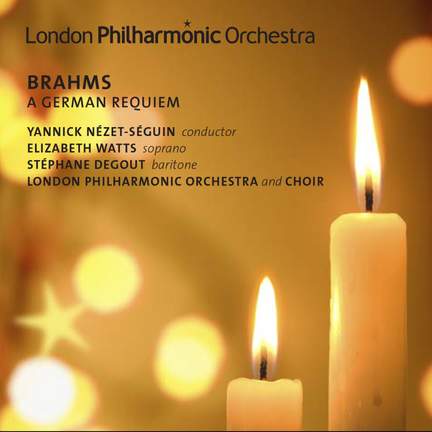
It's an extraordinary interpretation: for one thing, at least in the first two movements, it must be the slowest account I've ever heard...Yet, to be fair, the effect is neither glacial nor...
Brahms: Ein Deutsches Requiem, Op. 45
Elizabeth Watts (soprano) & Stéphane Degout (baritone)
London Philharmonic Orchestra and Choir, Yannick Nézet-Séguin
Purchase product
It's an extraordinary interpretation: for one thing, at least in the first two movements, it must be the slowest account I've ever heard...Yet, to be fair, the effect is neither glacial nor...
About
Newly appointed as the London Philharmonic Orchestra’s Principal Guest Conductor after just one appearance with the ensemble, Yannick Nézet-Séguin came to London in April 2009 to conduct Brahms’s profound A German Requiem. He presided over a performance of rare reflection and inevitability at the Royal Festival Hall that prompted an extraordinary silence from a capacity audience. In the young Canadian’s hands, Brahms’s uplifting choral masterpiece is marked by astutely judged tempi, emphasising the drama and the moment and drawing in and immersing the listener into this live concert recording.
Press acclaim:
‘Under the conspicuously talented Yannick Nezet-Seguin it shone, it thundered, it inspired awe and consolation in equal measure. I can’t honestly remember when it last sounded so all-enveloping...With wonderfully sensitive and articulate singing from the London Philharmonic Choir the fine balance between the work’s deep and abiding compassion and its death-defying exultation was memorably achieved. Awe was duly forthcoming as the mighty cortege of “Denn alles Fleisch, es ist wie Gras” rolled out, low horns and pounding timpani accentuating its black splendour, and those fugal codas were properly rollocking, hopeful affairs – blasts from the past powering towards the future.’ The Independent, April 2009
‘The choral singing was wonderfully intense, and soloists Elizabeth Watts and Stéphane Degout were both outstanding. The long silence at its close, which no one dared fracture with applause, was testament to its impact.’ The Guardian, April 2009
Contents and tracklist
Awards and reviews
 June 2010
It's an extraordinary interpretation: for one thing, at least in the first two movements, it must be the slowest account I've ever heard...Yet, to be fair, the effect is neither glacial nor too ponderous, but a passionate interpretation of burning sincerity, distinguished by superbly-sustained choral singing and orchestral playing.
 August 2010
I found so many things to enjoy about this recording...The live-ness, for one...the Royal Festival Hall has somewhat miraculously gained ambience, or at least atmosphere, probably thanks to the tension carefully sustained by the interpretation, and more particularly by the performers.