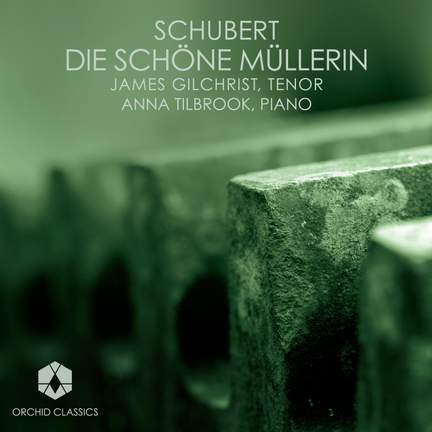
Special offer. Schubert: Die schöne Müllerin, D795
James Gilchrist (tenor) & Anna Tilbrook (piano)
Awards:
-
Gramophone Magazine, November 2009, Editor's Choice

…worthy to stand with the best. Gilchrist's light tenor, with its springing rhythmic life, makes us feel that the young lad is living very much in a wide-eyed emotional present, as elusive...
Special offer. Schubert: Die schöne Müllerin, D795
James Gilchrist (tenor) & Anna Tilbrook (piano)
Purchase product
Awards:
-
Gramophone Magazine, November 2009, Editor's Choice
…worthy to stand with the best. Gilchrist's light tenor, with its springing rhythmic life, makes us feel that the young lad is living very much in a wide-eyed emotional present, as elusive...
About
Renowned British tenor, James Gilchrist, presents his first recording for Orchid Classics, “Die Schöne Müllerin” (The Beautiful Maid of the Mill”), Schubert’s classic a setting of poems by Wilhelm Müller – generally accepted to be a masterpiece of the song genre.
Gilchrist has performed this cycle many times, to great acclaim, in concert in the UK and abroad – usually in partnership with Anna Tilbrook. He is one of Britain’s most popular and sought after singers. This is the first time he has recorded “t Die Schöne Müllerin “ and will make a wonderful addition to his already extensive discography
The CD booklet contains full German text with English translation, and an essay by Richard Morrison of The Times giving a fascinating insight into both Schubert and Die Schöne Müllerin.
“he is now unsurpassed amongst lyric tenors in sweetness and technical security, and for his musical intelligence” The Independent
Contents and tracklist
Awards and reviews
-
Gramophone MagazineNovember 2009Editor's Choice
 November 2009
…worthy to stand with the best. Gilchrist's light tenor, with its springing rhythmic life, makes us feel that the young lad is living very much in a wide-eyed emotional present, as elusive and ever-shifting as the delightful chiaroscuro of Anna Tilbrook's piano accompaniment.
 November 2009
…in place of the youthful impetuosity of Werner Güra is the anxiety of a man to seize what he can while he can. His jealousy - "Eifersucht and Stolz" - gains thereby a specially manic edge, and leaves him almost shouting at the end of "Die Böse Farbe" before he takes his leave of love and life in both sorrow and anger over the ever-more-painful course of the last triptych. How aptly Anna Tilbrook's pedalling poses the question to the brook at the beginning of "Die Neugierige", and how graciously Gilchrist waits until the last verse before slowing down to ask himself.
The Independent on Sunday 15th November 2009
There’s a touching simplicity to Gilchrist’s delivery...“Eifersucht und Stolz” and the “liebe/böse Farbe” songs are riveting…