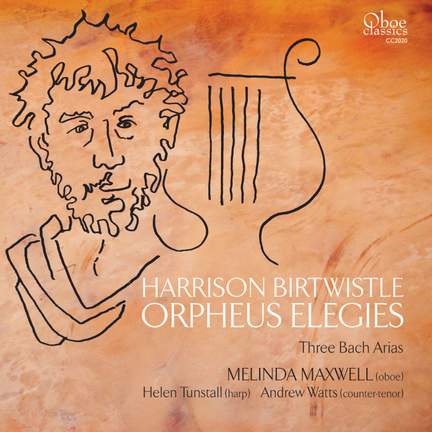
Birtwistle - Orpheus Elegies
Melinda Maxwell (oboe), Helen Tunstall (harp), Andrew Watts (counter-tenor) with Claire Seaton (soprano), William Stafford and Tom Verity (clarinets/bass clarinets) & Ben Fullbrook (marimba)
The range of musical processes and the power with which Birtwistle invest the writing is extraordinary. The pieces seem like snapshots from different perspectives of some vast, barely graspable...
Birtwistle - Orpheus Elegies
Melinda Maxwell (oboe), Helen Tunstall (harp), Andrew Watts (counter-tenor) with Claire Seaton (soprano), William Stafford and Tom Verity (clarinets/bass clarinets) & Ben Fullbrook (marimba)
Purchase product
The range of musical processes and the power with which Birtwistle invest the writing is extraordinary. The pieces seem like snapshots from different perspectives of some vast, barely graspable...
About
Sir Harrison Birtwistle’s compositional life from the mid 1970s to the 1980s was dominated by his opera The Mask of Orpheus, and the same period saw the origin of the Elegies, written for Melinda Maxwell and Helen Tunstall while they were working with the composer at the National Theatre.
‘They are like enchanted preludes…Enchantingly performed here’ The Sunday Times
Contents and tracklist
- Melinda Maxwell, Helen Tunstall, Andrew Watts
- Melinda Maxwell, Claire Seaton, Helen Tunstall, William Stafford, Ben Fullbrook
Johann Sebastian Bach, Harrison Birtwistle:
Herr, deine Augen sehen nach dem Glauben, BWV 102: Weh der Seele, die den Schaden
Work length4:50
- Melinda Maxwell, Andrew Watts, Helen Tunstall, William Stafford, Tom Verity, Ben Fullbrook
Johann Sebastian Bach, Harrison Birtwistle:
Erschallet, ihr Lieder, BWV 172: Komm, lass mich nicht länger warten
Work length4:11
- Melinda Maxwell, Claire Seaton, Andrew Watts, William Stafford, Tom Verity, Helen Tunstall, Ben Fullbrook
Awards and reviews
 November 2009
The range of musical processes and the power with which Birtwistle invest the writing is extraordinary. The pieces seem like snapshots from different perspectives of some vast, barely graspable musical object, one whose contours are constantly in flux and never definable. This performance is a fabulously committed, expressively pliable performance...
 November 2009
Orpheus Elegies…engages with Rilke's Sonnets to Orpheus, but keeps them at a distance. All three performers, in recordings that balance exemplary clarity of focus with finely sculpted detail, are wholly "inside" the piece's flexible yet inexorable formal design, which the composer describes in the admirably detailed booklet-notes as "like postcards with cryptic text".