Szymanowski - Harnasie
Wieslaw Ochman (tenor), Ewa Marczyk (violin solo), Alexander Pinderak (tenor), Kazimierz Koslacz (cello solo), Ewa Marciniec (mezzo-soprano)
Warsaw Philharmonic Orchestra, with Warsaw Philharmoni Choir, Antoni Wit
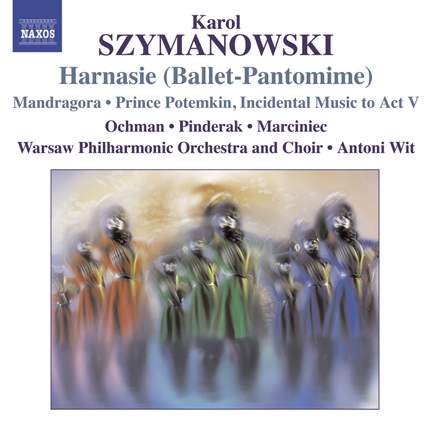
There are fine recordings of Harnasie in the current catalogue including an exciting performance from Rattle and the CBSO on EMI. This new versions from Antoni Wit… enjoys the benefit of equally...
Szymanowski - Harnasie
Wieslaw Ochman (tenor), Ewa Marczyk (violin solo), Alexander Pinderak (tenor), Kazimierz Koslacz (cello solo), Ewa Marciniec (mezzo-soprano)
Warsaw Philharmonic Orchestra, with Warsaw Philharmoni Choir, Antoni Wit
Purchase product
There are fine recordings of Harnasie in the current catalogue including an exciting performance from Rattle and the CBSO on EMI. This new versions from Antoni Wit… enjoys the benefit of equally...
About
Multiple prize-winner and Grammy award nominee for several of his Naxos recordings, Antoni Wit is one of today’s most highly regarded Polish conductors, an ideal interpreter of the exotic, colourfully scored music of Karol Szymanowski, described by Sir Simon Rattle as “one of the greatest composers of this century”.
The ballet-pantomime Harnasie and the incidental music for Prince Potemkin both draw on the folk-music of the people of the Tatra Mountains, while the ballet Mandragora was composed for a production of Molière’s comedy Le bourgeois gentilhomme.
Contents and tracklist
- Wieslaw Ochman
- Warsaw Philharmonic Choir, Warsaw Philharmonic Orchestra
- Antoni Wit
- Wieslaw Ochman
- Warsaw Philharmonic Choir, Warsaw Philharmonic Orchestra
- Antoni Wit
- Wieslaw Ochman
- Warsaw Philharmonic Choir, Warsaw Philharmonic Orchestra
- Antoni Wit
- Wieslaw Ochman
- Warsaw Philharmonic Choir, Warsaw Philharmonic Orchestra
- Antoni Wit
- Wieslaw Ochman
- Warsaw Philharmonic Choir, Warsaw Philharmonic Orchestra
- Antoni Wit
- Alexander Pinderak
- Warsaw Philharmonic Choir, Warsaw Philharmonic Orchestra
- Antoni Wit
- Alexander Pinderak
- Warsaw Philharmonic Choir, Warsaw Philharmonic Orchestra
- Antoni Wit
- Alexander Pinderak
- Warsaw Philharmonic Choir, Warsaw Philharmonic Orchestra
- Antoni Wit
- Ewa Marciniec
- Warsaw Philharmonic Choir, Warsaw Philharmonic Orchestra
- Antoni Wit
Awards and reviews
 April 2009
There are fine recordings of Harnasie in the current catalogue including an exciting performance from Rattle and the CBSO on EMI. This new versions from Antoni Wit… enjoys the benefit of equally outstanding sound but boasts a more idiomatic interpretation with a particularly earthy performance from tenor Wieslaw Ochman and the Warsaw Philharmonic Choir. The couplings are no less fascinating. Both works are delivered here in authoritative performances - a marvellous addition to this much-praised Szymanowski series.
 2010
2010
The ballet Harnasie is a powerful complement to the opera King Roger, giving similarly Dionysian subject-matter a very different dramatic setting.
Szymanowski's joyous embrace of folk idioms in Harnasie, and his relish for exploring them in ways which retain certain points of contact with his earlier late-romantic opulence, invites comparisons with Bartók and Janácek in the years after the First World War. But Harnasie has a very personal, Polish aura to it, well projected in this robust yet technically secure account by Antoni Wit and his Warsaw forces, including brief contributions from the veteran yet still strong-voiced Wiespaw Ochman.
The other examples of Szymanowski's theatre music are rarities, and neither quite convinces as a concert work. Mandragora was designed for a 1920 Warsaw production of Molière's Le bourgeoisgentilhomme and depicts, all too episodically, the mugging and mayhem of various attempts to entertain the assembled company – a scenario best known from Strauss's Ariadne auf Naxos. The incidental music Szymanowski provided in 1925 for the final act of Prince Potemkin, a Polish play about Russian history, was left in manuscript during the composer's lifetime, and he might well have been surprised to learn of its revival apart from its original function. While not entirely lacking in character, it comes across as rather dull, even in a performance as accomplished, committed and decently recorded as this one.
 June 2009
…Harnasie has a very personal, Polish aura to it, well projected in this robust yet technically secure account by Antoni Wit and his Warsaw forces, including brief contributions from the veteran yet still strong-voiced Wieslaw Ochman.
 27th February 2009
The Polish performance [of Harnasie] under Antoni Wit is efficient without being refined, though the other two works here - the pantomime Mandragora, and the 10 minutes of incidental music written for a play in 1925 - have rarity value.
 15th March 2009
It's strange that the gorgeously rhapsodic, folk-influenced music of Karol Szymanowski has not established a stronger place in the repertory. The pieces on this new disc are real rarities, yet anyone who responds to Stravinsky's Petrushka would love the exciting "ballet-pantomime" Harnasie, with its sudden outbursts of choral singing and solo tenor, and the Prince Potemkin music uses its folk-tune sources well. The real oddity is the pantomime Mandragora, an intermezzo for a Molière play in 20th-century style, with an eerie speaker repeatedly intoning the title word. Conductor Antoni Wit is the master of this strange but beautiful Polish idiom.