Special offer. Corigliano - Circus Maximus
The University of Texas Wind Ensemble, Jerry Junkin
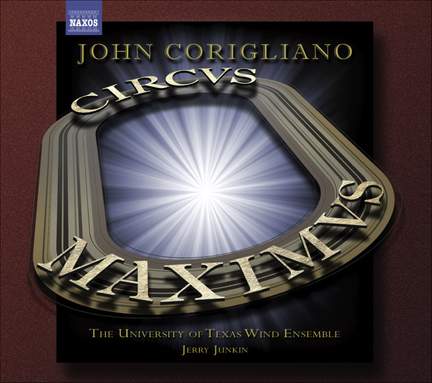
Just as Corigliano's First Symphony embodied his anger about Aids, this spectacular based on the vast Roman arena the Circus Maximus finds 'parallels between the high decadence of Rome and our...
Special offer. Corigliano - Circus Maximus
The University of Texas Wind Ensemble, Jerry Junkin
Purchase product
Other available formats

Just as Corigliano's First Symphony embodied his anger about Aids, this spectacular based on the vast Roman arena the Circus Maximus finds 'parallels between the high decadence of Rome and our...
About
In his astonishing Symphony No. 3, subtitled ‘Circus Maximus’, the celebrated American composer John Corigliano both embodies and comments on the “massive and glamorous barbarity” of our present time, which he sees paralleling the decadence of Ancient Rome.
Scored for a large concert band encircling the audience, it is a musical kaleidoscope of contemporary culture.
In contrast, Gazebo Dances was inspired by “the pavilions often seen on village greens in towns throughout the countryside, where public band concerts are given on summer evenings”.
“Corigliano could have made a comfortable living churning out film scores: his versatility, orchestral wizardry and fluency are undeniable.” BBC Music Magazine
Contents and tracklist
- University of Texas Wind Ensemble
- Jerry Junkin
- University of Texas Wind Ensemble
- Jerry Junkin
Awards and reviews
 2010
2010
Just as Corigliano's First Symphony embodied his anger about Aids, this spectacular based on the vast Roman arena the Circus Maximus finds 'parallels between the high decadence of Rome and our present time'. Corigliano rightly slates our entertainment-dominated culture and compares today's ubiquitous obsession with violence to the ancient Romans enjoying the sight of lions devouring human beings for amusement. This is heady stuff and nowhere more so than in the extravagant resources of Circus Maximus itself.
There's a stage band of 37 players plus four to five percussionists; a 'surround band' with 22 players including 11 trumpets and three percussionists; and a marching band that moves down the centre of the auditorium in track 6 and, like everything else, is stunningly caught by the sound engineers. As if that wasn't enough, the work ends with a sustained high note followed by a blast from a 12-bore shotgun! Some sections are as laceratingly violent as Varèse, and there are sirens and whistles too. But there's some repose in 'Night Music I' with its uncanny tapestry of animal sounds even if 'Night Music II' evolves into a nightmare through dotted rhythms. The following 'Prayer' is sustained triadic relief.
The American wind band has a noble tradition and Corigliano has added a substantial work to the repertoire. The Gazebo Dances, originally for piano duet, are affable early pieces with a waltz that falls out of step and a hectic tarantella.
 July 2009
The American wind band has a noble tradition and Corigliano has added a substantial work to the repertoire.