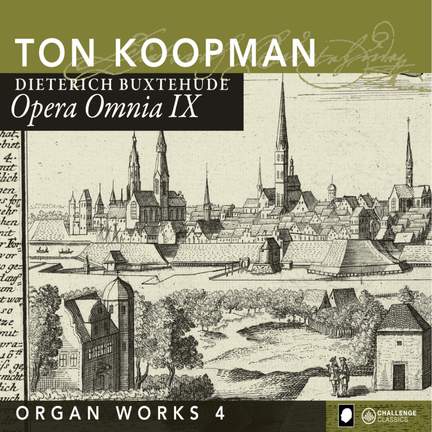
Buxtehude - Organ Works 4
Opera Omnia lX
Ton Koopman (organ)
The preludes afford Koopman his most exhilarating flights of fancy, but his ever-present unwillingness to 'play safe' stamps a thought-provoking individuality on an ongoing series which prefers...
Buxtehude - Organ Works 4
Opera Omnia lX
Ton Koopman (organ)
Purchase product
The preludes afford Koopman his most exhilarating flights of fancy, but his ever-present unwillingness to 'play safe' stamps a thought-provoking individuality on an ongoing series which prefers...
About
Dieterich Buxtehude’s organ works are his most significant contribution to the history of music. They consist of a comprehensive corpus of just 90 compositions, of which more than half are chorale settings. However, these are mostly shorter than the preludes, toccatas and other freely conceived pieces, so these last represent a more substantial share of his entire output. Five different types of pieces are included among the works collected in this CD, all representing distinct genres of improvisatory styles that make up the broad spectrum of the daily practice of organists in Lutheran Germany, whether designed as functional music for worship services, for presenting them in recitals, or for purposes of compositional study.
Ton Koopman studied organ with Simon C. Jansen and harpsichord with Gustav Leonhardt, alongside musicology in Amsterdam and was awarded the Prix d’Excellence for both instruments. As an organist he has performed and ecorded on the most prestigious historical instruments of Europe.
Contents and tracklist
Awards and reviews
 February 2009
The preludes afford Koopman his most exhilarating flights of fancy, but his ever-present unwillingness to 'play safe' stamps a thought-provoking individuality on an ongoing series which prefers to maximise Buxtehude's fertile quirkiness rather than entomb him in the marble of respectful old-masterdom.