Special offer. Liszt: Christus, S3
Andreas Schmidt (Baritone), Henriette Bonde-Hansen (Soprano), Iris Vermillion (Mezzo soprano), Michael Schade (Tenor)
Stuttgart Radio Symphony Orchestra, Stuttgart Gächinger Kantorei Choir, Cracow Chamber Choir, Helmuth Rilling
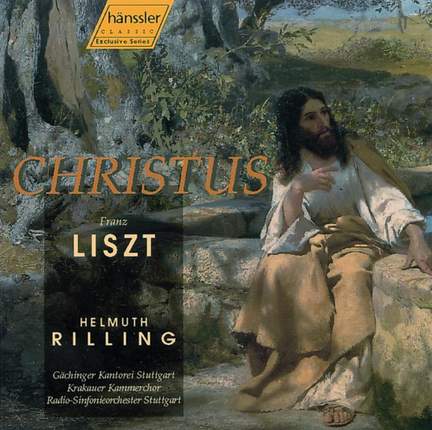
Christus is essentially a contemplative work and so could really be said to exist in a different timescale to most music. Much of the opening part, the 'Christmas Oratorio', uses very simple...
Special offer. Liszt: Christus, S3
Andreas Schmidt (Baritone), Henriette Bonde-Hansen (Soprano), Iris Vermillion (Mezzo soprano), Michael Schade (Tenor)
Stuttgart Radio Symphony Orchestra, Stuttgart Gächinger Kantorei Choir, Cracow Chamber Choir, Helmuth Rilling
Purchase product
Christus is essentially a contemplative work and so could really be said to exist in a different timescale to most music. Much of the opening part, the 'Christmas Oratorio', uses very simple...
About
The complete work was first performed on 29 May 1873 in the Protestant church in Weimar, under the direction of the composer and in the presence of, among others, Liszts daughter Cosima and her second husband, Richard Wagner. The performers numbered three hundered.
During Liszt´s lifetime it was performed ten more times. But after 1914 it virtually disappeared from the repertoire.
This recording will provide a start towards restoring an important oratorio to the rightful status which it occupied once before, at the turn of the 20th century.
Contents and tracklist
- Henriette Bonde-Hansen, Iris Vermillion, Michael Schade, Andreas Schmidt
- Gächinger Kantorei, Cracow Chamber Choir, Radio-Sinfonieorchester Stuttgart des SWR
- Helmuth Rilling
Awards and reviews
 2010
2010
Christus is essentially a contemplative work and so could really be said to exist in a different timescale to most music. Much of the opening part, the 'Christmas Oratorio', uses very simple melody and harmony, and is studiously undramatic. Helmuth Rilling does well not to charge it with too much colour, and, if listened to as meditation rather than drama, what can seem static takes on a positive atmosphere as a group of long reflections on the Christmas events. This is a far cry from the sensational Liszt of the early virtuoso years, not yet reaching the terse, inward pieces of the last years. There's greater drama in the middle part, 'After Epiphany', especially in the superb scene of Christ walking on the water. Although there's still the suggestion that a wonder is being contemplated, Liszt stirs up a terrific storm. This part also includes the beautiful setting of the Beatitudes, sung by Andreas Schmidt with a degree of uncertainty which he entirely sheds when he comes to pronounce the sentences in Part 3 ('Passion and Resurrection') for the scene of the Agony in the Garden. The long Stabat mater is beautifully controlled by Rilling. His soloists support him well.
The recording does excellent justice to Liszt's wide-ranging orchestration.