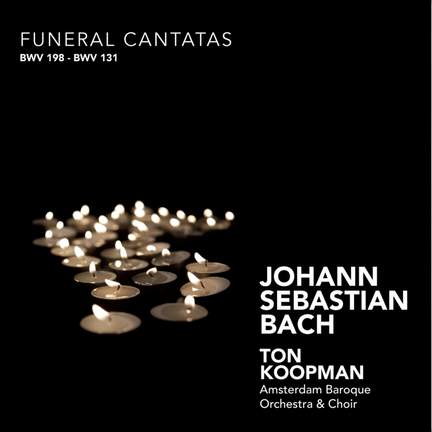
J S Bach - Funeral Cantatas
Lisa Larsson (soprano), Elizabeth von Magnus (alto), Paul Agnew & Guy de Mey (tenor) & Klaus Mertens (bass)
The Amsterdam Baroque Orchestra & Choir, Ton Koopman
In 'Lass, Fürstin', BWV 198, the aria with flute imitating the traditional funeral bell, magical pizzicato strings and lutes creates extraordinary colours. High pitch remains a strain (BWV...
J S Bach - Funeral Cantatas
Lisa Larsson (soprano), Elizabeth von Magnus (alto), Paul Agnew & Guy de Mey (tenor) & Klaus Mertens (bass)
The Amsterdam Baroque Orchestra & Choir, Ton Koopman
Purchase product
In 'Lass, Fürstin', BWV 198, the aria with flute imitating the traditional funeral bell, magical pizzicato strings and lutes creates extraordinary colours. High pitch remains a strain (BWV...
About
Selected from the award-winning cycle of recordings of the complete cantatas of J. S. Bach by Ton Koopman and the Amsterdam baroque Orchestra and Choir, the two “Funeral” pieces included in this album represent works from very different periods in Bach’s creative life. The cantata “Aus der Tiefen rufe ich, Herr, zu dir” BWV 131 originates from Mühlhausen and was written in 1707 or 1708 for an unknown occasion, most likely a penitential service perhaps related to the big fire that had devastated large sections of the town of Mühlhausen shortly before Bach’s arrival there in 1707. The Funeral Ode “Laß, Fürstin, laß noch einen Strahl” BWV 198 on the other hand is a large-scale, two-part cantata composed twenty years later in Leipzig in commemoration of the death of the Electress of Saxony and Queen of Poland. It is based on a morning poem in strophic ode format by Johann Christoph Gottsched, at the time Leipzig’s most celebrated literary figure. The artful poem was commissioned by an aristocratic student, Hans Carl von Kirchbach, in the name of the “German Society” at the University and for the academic act of mourning for the death of the Electress of Saxony and Queen of Poland, Christiane Eberhardine, wife of Augustus the Strong. Kirchbach commissioned the music for the event from another Leipzig celebrity, Johann Sebastian Bach, and not from the music director of the University, Johann Gottlieb Görner. The latter complained, but accepted the fact that this was an unusually prominent occasion. The work of 1727 could not be performed again in this form because the text makes concrete references to the queen. However, in 1731 the composer reused major parts of the Funeral Ode for his St. Mark Passion, now lost.
Contents and tracklist
- Amsterdam Baroque Orchestra & Choir
- Ton Koopman
- Amsterdam Baroque Orchestra & Choir
- Ton Koopman
- Amsterdam Baroque Orchestra & Choir
- Ton Koopman
- Amsterdam Baroque Orchestra & Choir
- Ton Koopman
- Amsterdam Baroque Orchestra & Choir
- Ton Koopman
- Amsterdam Baroque Orchestra & Choir
- Ton Koopman
- Amsterdam Baroque Orchestra & Choir
- Ton Koopman
- Amsterdam Baroque Orchestra & Choir
- Ton Koopman
- Amsterdam Baroque Orchestra & Choir
- Ton Koopman
- Amsterdam Baroque Orchestra & Choir
- Ton Koopman
- Amsterdam Baroque Orchestra & Choir
- Ton Koopman
Awards and reviews
 October 2008
In 'Lass, Fürstin', BWV 198, the aria with flute imitating the traditional funeral bell, magical pizzicato strings and lutes creates extraordinary colours. High pitch remains a strain (BWV 131), though distant soprano chorale over solo bass and oboe is heavenly.