Special offer. Telemann: Overtures
Collegium Instrumentale Brugense, Patrick Peire
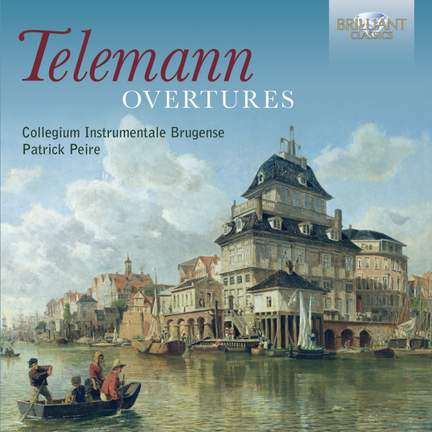
Special offer. Telemann: Overtures
Collegium Instrumentale Brugense, Patrick Peire
Purchase product
About
A generous selection of 33 Overtures (or Orchestral Suites) by Georg Philipp Telemann, formerly issued separately, now collected in one 8-CD set. Telemann’s Suites are written for strings and several solo instruments such as flute, oboe, bassoon or horn (each overture has a different instrumentation), beginning with a grand Overture in French style, followed by a suite of shorter dance movements.
The overtures are highly attractive works and deserve to be as popular as the suites of Handel (Water Music) and Bach (orchestral suites).
Excellent performances on modern instruments, however according to the historically informed performance practice, by the elite ensemble Collegium Instrumentale Brugense, conducted by Patrick Peire.
Although Telemann chose the title of ‘Overtures’, this was somewhat interchangeable with the genre of the Suite in his era. Each work opens with a three-part French overture, and this is followed by a series of varied, shorter pieces – encompassing everything from dances (drawn from the French tradition and beyond), fugues, chaconnes, passacailles, musical portraits, folk dances and evocations of scenes and characters.
In these eight discs, Collegium Instrumentale Brugense and Patrick Peire’s three separate volumes of Telemann Overtures have been collected together for the first time, creating a box set that is set apart by its breadth. Its overview of 33 Overtures illuminates Telemann’s hugely inventive approach to instrumentation, while revealing the wealth of subjects that he sought inspiration in.
The ‘Alster Overtüre’, for example, named after the Alster river in Germany, features a ‘Concert of Frogs and Crows’, while another Overture is inspired by Cervantes’ Don Quixote. Beyond this, the set is distinguished by authoritative performances. Collegium Instrumentale Brugense and Patrick Peire are experts in historical performance practice, but use modern instruments, making these recordings truly distinctive and rigorously researched.