Berlioz: La Damnation de Faust, Op. 24
Susan Graham, Thomas Moser, José Van Dam, Frédéric Caton
Orchestre et Choeurs de Opéra de Lyon, Kent Nagano
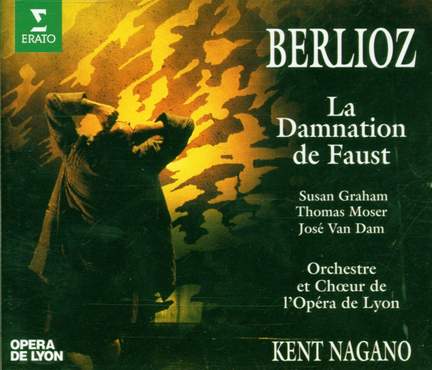
as good this is rare. At its centre is a perception of Berlioz's extraordinary vision, in all its colour and variety and humour and pessimism, and the ability to realise this in a broad downward...
Berlioz: La Damnation de Faust, Op. 24
Susan Graham, Thomas Moser, José Van Dam, Frédéric Caton
Orchestre et Choeurs de Opéra de Lyon, Kent Nagano
Purchase product
as good this is rare. At its centre is a perception of Berlioz's extraordinary vision, in all its colour and variety and humour and pessimism, and the ability to realise this in a broad downward...
About
Contents and tracklist
- José van Dam (baritone), Thomas Moser (tenor), Frédéric Caton (bass)
- Orchestre de l'Opéra de Lyon, Maîtrise de l'Opéra de Lyon, Choeurs de l'Opéra de Lyon, Choeur de l'Opéra de Lyon
- Kent Nagano
Part 1 "Les bergers quittent leurs troupeaux" [Chorus, Faust] "Mais d'un éclat guerrier les campagnes se parent" [Faust]
Track length4:04
- Thomas Moser (tenor), José van Dam (baritone)
- Orchestre de l'Opéra de Lyon, Choeur de l'Opéra de Lyon, Maîtrise de l'Opéra de Lyon
- Kent Nagano
- Susan Graham (mezzo-soprano), Thomas Moser (tenor), Anton Kholodenko (viola), José van Dam (baritone)
- Orchestre de l'Opéra de Lyon, Choeur de l'Opéra de Lyon
- Kent Nagano
Part 2 "Villes entourées" [Chorus] "Jam nox stellata velamina pandit" [Chorus, Faust Méphistophélès]
Track length4:18
Berlioz:
La Damnation de Faust, Op. 24, Part 3: "Devant la maison" (Méphistophélès, Chorus)
Work length2:21
- José van Dam (baritone)
- Orchestre de l'Opéra de Lyon, Choeur de l'Opéra de Lyon
- Kent Nagano
- Thomas Moser (tenor), Patrick Roger (cor anglais), Susan Graham (mezzo-soprano), José van Dam (baritone)
- Maîtrise de l'Opéra de Lyon, Orchestre de l'Opéra de Lyon, Choeurs de l'Opéra de Lyon, Choeur de l'Opéra de Lyon
- Kent Nagano
Part 4 "Has! Irimirukarabrao! Has!" [Chorus, Méphistophélès] "Alors l'Enfer se tut!" [Chorus]
Track length4:45
Awards and reviews
 2010
2010
as good this is rare. At its centre is a perception of Berlioz's extraordinary vision, in all its colour and variety and humour and pessimism, and the ability to realise this in a broad downward sweep while setting every detail sharply in place. It's a work about the steady failure of consolations in a romantic world rejecting God, until all Faust's sensations are numbed and Mephistopheles has him trapped in the hell of no feeling. Every stage of the progress is mercilessly depicted here. The chorus is brilliant in all its roles, offering in turn the lively charms of peasant life, raptures of faith in the Easter Hymn, beery roistering in Auerbach's Cellar that grows as foul as a drunken party, cheerful student Latin bawls; later they sing with delicacy as Mephistopheles's spirits of temptation and finally become a vicious pack of demons. Nagano takes the Hungarian March at a pace that grows hectic as the dream of military glory turns hollow. It's all brilliantly realised.
There's the same care for orchestral detail.
Nagano seems to be conducting from the New Berlioz Edition score, and he uses his imagination with it. He has an unerring sense of tempo, balancing weight of tone against speed, and he can light upon the telling contrapuntal line, or point a detail of instrumental colour or even a single note (like the snarl in the Ride to the Abyss), elements that give Berlioz's marvellous orchestration its expressive quality.
José van Dam is outstanding as Mephistopheles, curling his voice round phrases with hideous elegance, relishing the mock-jollity of the Serenade and the Song of the Flea, taunting Faust with lulling sweetness on the banks of the Elbe, yet also disclosing the sadness of the fallen spirit.
Thomas Moser sings gravely and reflectively as he's first discovered on the plains of Hungary, and rises nobly to the challenge of the Invocation to Nature, but is almost at his finest in the many recitative passages as he twists and turns in Mephistopheles's grasp.
Susan Graham doesn't match these two superb performances but sings her two arias simply and well. This version sets Nagano among the outstanding Berlioz conductors of the day.