Special offer. Malcolm Goldstein - A Sounding of Sources
Malcolm Goldstein (solo violin), Radu Malfatti (trombone), Philippe Micol (bass clarinet), Philippe Racine (flute) & Beat Schneider (violoncello)
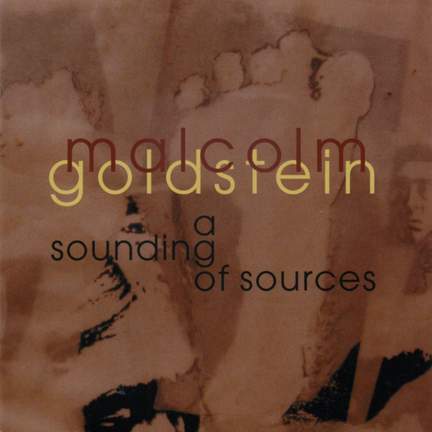
Special offer. Malcolm Goldstein - A Sounding of Sources
Malcolm Goldstein (solo violin), Radu Malfatti (trombone), Philippe Micol (bass clarinet), Philippe Racine (flute) & Beat Schneider (violoncello)
Purchase product
About
As a composer/violinist/improviser Malcolm Goldstein (b. 1936) has been active in the presentation of new music and dance since the early 1960s in New York City as a co-founder with James Tenney and Philip Corner of the Tone Roads Ensemble and as a participant in the Judson Dance Theater, the New York
Festival of the Avant-Garde, and the Experimental Intermedia Foundation. His “Soundings” improvisations have received international acclaim for having “reinvented violin playing,” extending the range of tonal/sound-texture possibilities of the instrument and revealing new dimensions of expressivity. Since the mid-1960s he has integrated structured improvisation aspects into his compositions, exploring the rich sound-textures of new performance techniques within a variety of instrumental and vocal frameworks.
Goldstein has been labeled an “improviser” and a “composer-violinist” (or merely a violinist). What this CD once and for all shows is that he is indeed those things, but encompassing them all is the fact that, profoundly, he is a composer. As he points out, “At the core of Baroque music was the integration of composition and improvisation,” and Goldstein brings the perspective and focus of a seasoned performer to this undertaking. In this way his music represents a further evolution of that compositional-improvisational dialogue begun in the early 1950s in the aleatoric, “chance” pieces of composers like John Cage, Earle Brown, Christian Wolff and Morton Feldman.
Contents and tracklist
- Malcolm Goldstein
- Malcolm Goldstein, Philippe Racine, Radu Malfatti, Beat Schneider, Philippe Micol
- Malcolm Goldstein
- Malcolm Goldstein