Saint-Saëns: Samson et Dalila
Placido Domingo, Waltraud Meier
Orchestre et choeurs de l'Opéra-Bastille, Myung-Whun Chung
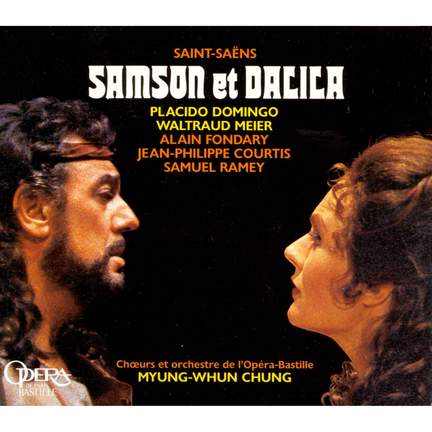
This is the most subtly and expertly conducted performance of this work to appear on CD, excellent as others have been in this respect, and also the best played and sung. Chung's achievement...
Saint-Saëns: Samson et Dalila
Placido Domingo, Waltraud Meier
Orchestre et choeurs de l'Opéra-Bastille, Myung-Whun Chung
Purchase product
This is the most subtly and expertly conducted performance of this work to appear on CD, excellent as others have been in this respect, and also the best played and sung. Chung's achievement...
About
Contents and tracklist
- François Harismendy (tenor), Daniel Galvez-Vallejo (tenor), Christian Papis (tenor), Plácido Domingo (tenor), Myung-Whun Chung (director), Waltraud Meier (mezzo-soprano), Jean-Philippe Courtis (bass), Alain Fondary (bass-baritone), Samuel Ramey (bass)
- Orchestre de l'Opéra national de Paris, Choeur de l'Opéra Bastille, Orchestre De L'Opera Bastille
- Myung-Whun Chung
- Recorded: 1992-01-01
Seigneur ! la troupe furieuse (Un messager Philistin, 1er et 2ème Philistins, Le Grand Prêtre)
Track length2:48
Vois ma misère, hélas ! vois ma détresse ! (Samson, Les Hébreux)
Track length10:52
This track is only available as an album download.
Awards and reviews
 2010
2010
This is the most subtly and expertly conducted performance of this work to appear on CD, excellent as others have been in this respect, and also the best played and sung. Chung's achievement is to have welded the elements of pagan ruthlessness, erotic stimulation and Wagnerian harmony that comprise Saint- Saëns's masterpiece into a convincing whole.
His success is based on the essentials of a firm sense of rhythm and timing allied to a realisation of the sensuousness and delicacy of the scoring. Whether in the lamenting of the Hebrews, the forceful music written for the High Priest, the heroics of Samson, the sensual outpourings of Dalila, or the empty rejoicing of the Bacchanale, he and his orchestra strike to the heart of the matter – and that orchestra plays with Gallic finesse, augmented by a dedicated discipline.
The choral singing, though too distantly recorded, is no less alert and refined, with a full range of dynamic contrast. Meier's Dalila is a fascinating portrayal of this equivocal anti-heroine, seductive, wheedling, exerting her female wiles with the twin objects of sexual dominance and political command. All her sense of purpose comes out in her early greeting to the High Priest, 'Salut à mon père'; then she's meditative and expectant as Dalila ponders on her power at 'Se pourrait-il'. The set numbers are all sung with the vocal ease and long phrase of a singer at the zenith of her powers. She makes more of the text than Domingo who sings in his familiar, allpurpose style, admirable in itself, somewhat missing the particular accents brought to this music by the great French tenors of the past.
They exist no more and one must salute the sterling and often eloquent tones of Domingo.
Alain Fondary is superb as the High Priest, firm and rich in tone, commanding and vengeful in delivery: the most compelling interpreter of the part on disc, tout court. Ramey is luxury casting as the Old Hebrew, but as this is a part once sung by Pinza, Ramey probably felt he wasn't slumming it. After an unsteady start, he sings the small but important role with breadth and dignity. As Abimelech, Jean-Philippe Courtis makes much of little. Apart from the two reservations already made, the recording is admirable, with a wide and spacious sound, and the soloists forward, but well integrated. This must now be the outright recommendation for this work.