Bertali: Ciaconna in C major, etc.
John Holloway, Aloysia Assenbaum, Lars Ulrik Mortensen
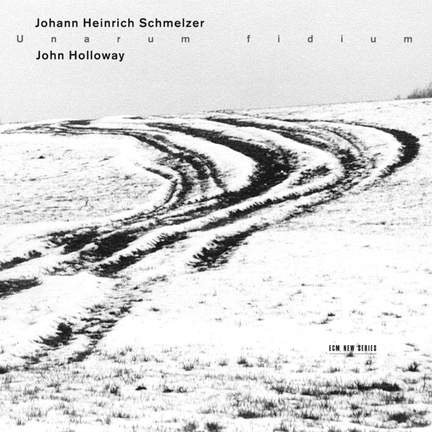
Johann Heinrich Schmelzer was the first homegrown Kapellmeister to be appointed at the Hapsburg Court in Vienna in 1679, following generations of Italians hired for their oltremontani flair...
Bertali: Ciaconna in C major, etc.
John Holloway, Aloysia Assenbaum, Lars Ulrik Mortensen
Purchase product
Johann Heinrich Schmelzer was the first homegrown Kapellmeister to be appointed at the Hapsburg Court in Vienna in 1679, following generations of Italians hired for their oltremontani flair...
About
Contents and tracklist
- John Holloway (violin), Lars Ulrik Mortensen (harpsichord), Aloysia Assenbaum-Holloway (organ)
- Recorded: 1999
- Recording Venue: Kloster Fischingen
- John Holloway (violin), Lars Ulrik Mortensen (harpsichord), Aloysia Assenbaum-Holloway (organ)
- Recorded: 1999
- Recording Venue: Kloster Fischingen
- John Holloway (violin), Lars Ulrik Mortensen (organ), Aloysia Assenbaum-Holloway (organ)
- Recorded: 1999
- Recording Venue: Kloster Fischingen
Awards and reviews
 2010
2010
Johann Heinrich Schmelzer was the first homegrown Kapellmeister to be appointed at the Hapsburg Court in Vienna in 1679, following generations of Italians hired for their oltremontani flair and easy command of prevailing fashion.
Schmelzer's six sonatas from 1664 are certainly Italianate, and not without freewheeling virtuosity, but they also contain a type of extended lyricism, and, as in the opening of the Fourth Sonata, a sense of no-nonsense progression of comforting expectation. In fact, this work, and that by his dynamic forebear, Antonio Bertali (whose own Chiaconna is quite a partypiece) are typical 17th-century showcases for the violin where intricate and fantastical divisions unfold above a recurring bass pattern. The playing in this technically demanding repertoire is dazzling, and the intonation faultless. Yet equally impressive is John Holloway's measured classicism and subtle poetical restraint. Not every bar of Schmelzer's set is compelling and he opts for a consistent clarity of sound rather than milking every note as if it's of earth-shattering importance; he uses rubato discerningly, as in the introspective musings in the Fifth Sonata where the narrative is beautifully and elegantly articulated. The idea of a double continuo of organ and harpsichord is highly effective throughout.
The first recording of Sonatae unarum was made by Romanesca (see above), and they too opt for a counterpoint of continuos with organ and theorbo. The sense of a rich consort-like texture can only bring a much-needed breadth to music which might otherwise test the concentration over the course of an hour. To choose between these two fine recordings isn't easy, save to say that Romanesca is more consistently adventurous and theatrical. Holloway and his excellent keyboardists are less extrovert, softergrained and more inclined to hover with sweet and restrained decorum. Both recordings are exceptional in their way, revealing how much interpretative leeway Schmelzer gives his players.