Mahler: Symphony No. 9
Berliner Philharmoniker, Sir Simon Rattle
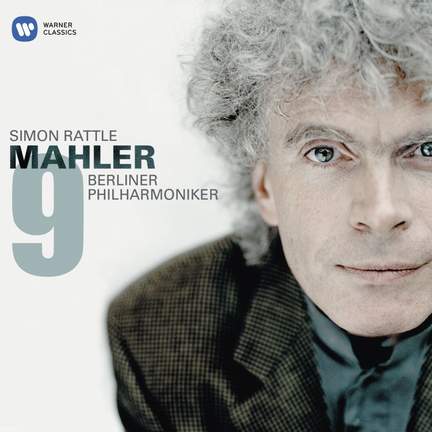
Awards:
-
Presto Recording of the Week, 3rd March 2008

-
Gramophone Magazine, March 2008, Editor's Choice

In his previous recording of Mahler's Ninth Symphony, made live with the Vienna Philharmonic in 1993, Simon Rattle tapped into the music's emotional extremes to produce a surprisingly volatile...
Mahler: Symphony No. 9
Berliner Philharmoniker, Sir Simon Rattle
Purchase product
Awards:
-
Presto Recording of the Week, 3rd March 2008
-
Gramophone Magazine, March 2008, Editor's Choice
In his previous recording of Mahler's Ninth Symphony, made live with the Vienna Philharmonic in 1993, Simon Rattle tapped into the music's emotional extremes to produce a surprisingly volatile...
About
Simon Rattle began recording the Mahler symphonies for EMI Classics in 1987, the first foray being Symphony No. 2 with the CBSO, and the subsequent cycle has seen great critical success.
Gramophone said of Sir Simon’s earlier recording of Mahler 9 with the Vienna Philharmonic Orchestra for EMI: “How thrilling it is to hear the score projected at white heat! This is at various times the loudest, softest, fastest and slowest Mahler Ninth on disc.” And the magazine commented on his Mahler 10 recording with the BPO, which was his first Mahler with the orchestra: “Rattle makes the strongest possible case for an astonishing piece of revivification that only the most die-hard purists will resist. Strongly recommended.”
Contents and tracklist
- Berliner Philharmoniker
- Sir Simon Rattle
- Recorded: 2007-10-27
- Recording Venue: Recorded in Concert 24 - 27 October 2007. Philharmonie, Berlin
Spotlight on this release
-
Rattle and Gergiev on Mahler
3rd Mar 2008

Awards and reviews
-
Presto Recording of the Week3rd March 2008
-
Gramophone MagazineMarch 2008Editor's Choice
 2010
2010
In his previous recording of Mahler's Ninth Symphony, made live with the Vienna Philharmonic in 1993, Simon Rattle tapped into the music's emotional extremes to produce a surprisingly volatile reading full of precipitous accelerandi and wrenching ritardandi. There's some of that volatility in this new account from Berlin, too, though it's certainly less pronounced.
There are places, too, where more tenderness wouldn't come amiss: the entrance of the solo violin in the first movement's recapitulation is so much sweeter in Vienna. But Rattle and the Berliners are also capable of taking one's breath away. Listen later in the same movement, as they gather the seemingly chaotic tangle of melodic filaments together, creating a single, gigantic, darkly radiant chord.
The rustic dances in the second movement have a strong, rough-hewn quality, even if they sound slightly dour when compared with the more gemütlich charm of, say, Abbado's Berlin recording. Rattle doesn't push hard in the Rondo-Burleske until the end; instead, he aims for clarity and articulateness, and scrupulously observes all the dynamic twists and turns. It's an effective approach, though less adrenalin-pumping than Karajan.
It's in the final Adagio, however, that Rattle and his orchestra make the most powerful impact. The strings sound gorgeous, of course, yet there's grit as well as radiance in their tone.
And it's only in the final pages that the earthy impurities are leeched, leaving a breath-like purity that ebbs into rapt silence.
 March 2008
Rattle and the Berliners are capable of taking one's breath away. It's in the final Adagio that Rattle and his orchestra make the most powerful impact. The strings sound gorgeous, of course, yet there's grit as well as radiance in their tone. And it's only in the final pages that the earthy impurities are leeched, leaving a breath-like purity that ebbs into rapt silence.
Oberösterreichische Nachrichten
Sir Simon Rattle has once again demonstrated his great affinity for this music and his ability to recreate it in the most thrilling fashion.[...] It is hardly possible to imagine a realization of this music at once more moving and more menacing. The finale was heavenly, with the Berliners pulling out all the stops. Outstanding solo playing, subtly savoured colours, saturated and warmly sonorous wind chords and a pianissimo that died away into utter oblivion – all these contributed to making this a sensational concert.