Praetorius - Dances from Terpsichore, 1612
Recorded 1980s
New London Consort, Philip Pickett
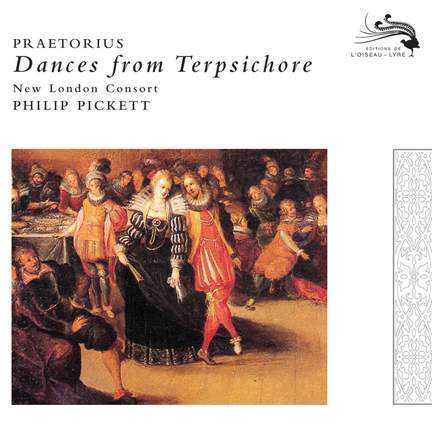
One of Pickett's best albums, if short measure; but the booklet's attempt to distance if from Munrow et al is nonsense - the Parley of Instruments (Hyperion) offers a more radical take on these...
Praetorius - Dances from Terpsichore, 1612
Recorded 1980s
New London Consort, Philip Pickett
Purchase product
One of Pickett's best albums, if short measure; but the booklet's attempt to distance if from Munrow et al is nonsense - the Parley of Instruments (Hyperion) offers a more radical take on these...
About
An impressive array of authentic instruments are employed on this recording, details and drawings of which are to be found in the Syntagma Musicum. These range from lutes, theorbos, cornets and sackbuts, to shawms, rackets, curtals and sorduns, as well as percussion instruments such as tabors, dulcimers, tambourines and timpani. These Dances are written around French melodies and airs, however the dances themselves come from numerous geographical origins, including England (Bransle), Latin-America (Sarabande), Netherlands (Spagnoletta) and Italy (Passamezzo). The instrumentation on this recording is based upon knowledge of the instruments available in Germany at the time of composition. Complete instrumental listings for each Dance are detailed in the booklet, which also features drawings of some of the instruments. All performing versions are prepared by Philip Pickett.
Contents and tracklist
- New London Consort
- Philip Pickett
- Recorded: 1985-03-23
- Recording Venue: Henry Wood Hall, London
Awards and reviews
 February 2008
One of Pickett's best albums, if short measure; but the booklet's attempt to distance if from Munrow et al is nonsense - the Parley of Instruments (Hyperion) offers a more radical take on these lovely dances.

Philip Pickett’s instrumentation (based on the illustrations which act as an appendix to the maestro’s second volume of Syntagnma Musicum of 1619) is sometimes less exuberant than that of David Munrow before him; but many will like the refinement of his approach, with small instrumental groups, lute pieces and even what seems like an early xylophone! The recording is splendid.