Special offer. Vivaldi: Juditha Triumphans, RV644
Magdalena Kozena (Juditha), Marina Comparato (Vagaus), Maria Jose Trullu (Holofernes), Anike Herrmann (Abra), Tiziana Carraro (Ozias)
Academia Montis Regalis, Alessandro de Marchi
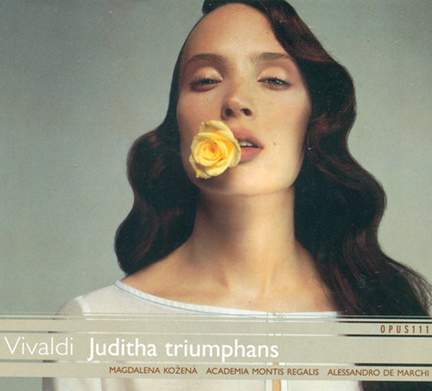
Vivaldi's only surviving oratorio, Juditha triumphans (1716), with its strongly characterised roles and luxuriant orchestration, is a true Baroque masterpiece. Alessandro de Marchi has departed...
Special offer. Vivaldi: Juditha Triumphans, RV644
Magdalena Kozena (Juditha), Marina Comparato (Vagaus), Maria Jose Trullu (Holofernes), Anike Herrmann (Abra), Tiziana Carraro (Ozias)
Academia Montis Regalis, Alessandro de Marchi
Purchase product
Vivaldi's only surviving oratorio, Juditha triumphans (1716), with its strongly characterised roles and luxuriant orchestration, is a true Baroque masterpiece. Alessandro de Marchi has departed...
About
Contents and tracklist
Work length9:21
- Tiziana Carraro (mezzo-soprano), Marina Comparato (mezzo-soprano), Maria Jose Trullu (alto), Anke Herrmann (soprano), Magdalena Kožená (mezzo-soprano)
- Coro Giovanile dell'Accademia Nazionale di Santa Cecilia, Academia Montis Regalis
- Alessandro De Marchi
Awards and reviews
 2010
2010
Vivaldi's only surviving oratorio, Juditha triumphans (1716), with its strongly characterised roles and luxuriant orchestration, is a true Baroque masterpiece. Alessandro de Marchi has departed from other recent interpreters by daring to transpose the tenor and bass choral parts up an octave, as is widely believed was done by Vivaldi himself to accommodate the choir of the Ospedale della Pietà. The effect is breathtaking: the compressed, female choral textures positively gleam. From his superb cast of female soloists, de Marchi coaxes remarkable and dramatically convincing male vocal timbres.
Maria José Trullu projects the various sides of Holofernes, who's depicted not merely as a monster but as capable of dignity and charm, even if ultimately incautious; she infuses her tone with a warmth and richness that countertenors might envy.
Magdalena KoOená, the Bethulian widow Judith, casts a spell on those who only hear her: as well as Holofernes. She sings with poise almost throughout, as she enters the enemy camp, meets and seduces Holofernes, reflects on the transitoriness of life and prays for peace and strength before murdering the sleeping Holofernes.
Only then, as she carries out her heroic – if horrific – mission does she fully convey her emotion.
The instrumentation offers a treasure trove of unusual and evocative instruments, even for the time: a pair of clarinets to characterise the dissolute Assyrian soldiers, recorders for 'nocturnal breezes' and a quartet of theorbos to depict the preparation of the feast. These and the more common obbligato and continuo instruments of the day are affectingly played by the musicians of the Academia Montis Regalis. At every turn there's ample evidence of the care de Marchi has lavished on this performance, and Robert King's by comparison seems less full-blooded and relatively static.
Congratulations all round for an outstanding recording.