Verdi: I Vespri Siciliani
Maria Callas (Elena), Boris Christoff (Giovanni da Procida), Enzo Mascherini (Guido di Montforte), Giorgio Kokolios-Bardi (Arrigo), Bruno Carmassi (Il Sire di Bethume), Mario Frosini (Il Conte Vaudemont), Mafalda Masini (Ninetta), Gino Sarri (Danieli), Aldo De Paoli (Tebaldo), Lido Pettini (Roberto),...
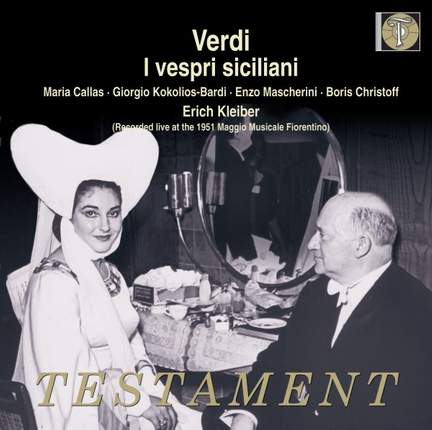
This recording, like Verdi's opera, has attracted mixed reviews over the years. Composed for Paris in 1855, Les Vêpres siciliennes has never enjoyed the affection of critics or public in the...
Verdi: I Vespri Siciliani
Maria Callas (Elena), Boris Christoff (Giovanni da Procida), Enzo Mascherini (Guido di Montforte), Giorgio Kokolios-Bardi (Arrigo), Bruno Carmassi (Il Sire di Bethume), Mario Frosini (Il Conte Vaudemont), Mafalda Masini (Ninetta), Gino Sarri (Danieli), Aldo De Paoli (Tebaldo), Lido Pettini (Roberto),...
Purchase product
This recording, like Verdi's opera, has attracted mixed reviews over the years. Composed for Paris in 1855, Les Vêpres siciliennes has never enjoyed the affection of critics or public in the...
About
Recorded live on 26th May 1951 at the Maggio Musicale Fiorentino.
Artists
Maria Callas (Elena), Boris Christoff (Giovanni da Procida), Enzo Mascherini (Guido di Montforte), Giorgio Kokolios-Bardi (Arrigo), Bruno Carmassi (Il Sire di Bethume), Mario Frosini (Il Conte Vaudemont), Mafalda Masini (Ninetta), Gino Sarri (Danieli), Aldo De Paoli (Tebaldo), Lido Pettini (Roberto), Brenno Ristori (Manfredo)
Chorus and Orchestra of the Teatro Comunale di Firenze, Erich Kleiber
Contents and tracklist
Awards and reviews
 2010
2010
This recording, like Verdi's opera, has attracted mixed reviews over the years. Composed for Paris in 1855, Les Vêpres siciliennes has never enjoyed the affection of critics or public in the way the other 'mid-period' operas (Boccanegra, Ballo and Forza) have.
This revival was one of the productions that helped to spread Maria Callas's fame. At the time, Lord Harewood wrote memorably in Opera magazine about the tremendous force he puts into the recitative in Act 1, in which the Duchess Elena encourages the Sicilian population to rebellion with the words 'Il vostro fato e in vostra man' ('Your fate is in your own hands').
Callas is terrific in the Act 1 aria and cabaletta, as well as in the long duet with Arrigo in Act 4, sung by Greek tenor Giorgio Kokolios-Bardi.
He had been one of Callas's leading men at the National Opera in Athens, and she particularly requested him for this part. He's no Di Stefano but he gives a good performance, especially of the aria in the Fourth Act, 'Giorno di pianto'. In some ways this opera is dominated by the two low male voices – Boris Christoff is magnificent as the gloomy, unforgiving Procida, while Enzo Mascherini is in his element as the anguished Guido di Montforte, who finds out too late that his opponent is his own son.
Erich Kleiber is not usually associated with the 19th-century Italian repertory but he leads a vigorous performance, although there are quite a few cuts. This tape (made for Walter Legge) does not include the overture, so the opera fits on two CDs. For Callas and Christoff admirers, of course, this is an essential document.
Although the sound quality is variable, it is clearer than previous issues. The Testament booklet is excellent, the libretto available to download from the company's website.
 Janurary 2008
Callas is terrific in the Act 1 aria and cabaletta, as well as in the long duet with Arrigo in Act 4… Boris Christoff is magnificent as the gloomy, unforgiving Procida… Erich Kleiber… leads a vigorous performance…
 2010 edition
[Callas] is already magnetic, the voice at its freshest...The sound has been again remastered and, though very variable, is certainly acceptable.