Special offer. Vinci - Cantate e Intermezzi
Napoli/Madrid
Roberta Invernizzi (soprano), Cristina Calzolari (contralto), Giuseppe De Vittorio (tenor) & Giuseppe Naviglio (baritone)
Cappella della pieta de’Turchini, Antonio Florio
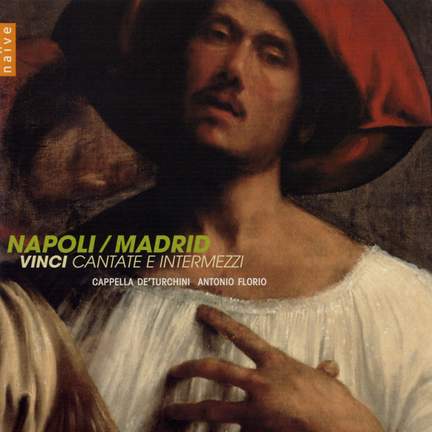
For more than two centuries Naples was a province of Spain, and after this ended in 1707 the remarkable cross-fertilisation of culture between them did not stop. Much of the Italian music featured...
Special offer. Vinci - Cantate e Intermezzi
Napoli/Madrid
Roberta Invernizzi (soprano), Cristina Calzolari (contralto), Giuseppe De Vittorio (tenor) & Giuseppe Naviglio (baritone)
Cappella della pieta de’Turchini, Antonio Florio
Purchase product
For more than two centuries Naples was a province of Spain, and after this ended in 1707 the remarkable cross-fertilisation of culture between them did not stop. Much of the Italian music featured...
About
Contents and tracklist
- Roberta Invernizzi (soprano), Giuseppe Naviglio (baritone)
- Cappella de' Turchini
- Antonio Florio
- Cappella de' Turchini
- Antonio Florio
- Roberta Invernizzi (soprano), Giuseppe de Vittorio (tenor)
- Cappella de' Turchini
- Antonio Florio
- Cristina Calzolari (alto)
- Cappella de' Turchini
- Antonio Florio
- Roberta Invernizzi (soprano)
- Cappella de' Turchini
- Antonio Florio
- Cristina Calzolari (alto)
- Cappella de' Turchini
- Antonio Florio
- Giuseppe de Vittorio (tenor), Giuseppe Naviglio (baritone), Roberta Invernizzi (soprano)
- Cappella de' Turchini
- Antonio Florio
Awards and reviews
 2010
2010
For more than two centuries Naples was a province of Spain, and after this ended in 1707 the remarkable cross-fertilisation of culture between them did not stop. Much of the Italian music featured here has been edited from sources in Spanish collections. The vast bulk of it is devoted to Leonardo Vinci (one of the most celebrated Italian opera composers of the 1720s). Only one short piece tacked onto the end is actually Spanish: a colourful fandango from José de Nebra's zarzuela Vendado es amor,no es ciego (1744) in which three singers mockingly compare the squabbling goddesses of classical antiquity to bickering mothers-in-law.
Antonio Florio and Cappella della Pietà de'Turchini have already given unstinting service to the cause of music from Naples, but this is one of their best recordings so far. The playing and singing are theatrically charged without ever becoming crass or forced, and there is a lean articulacy evident throughout. This is no mean feat in two cliché-ridden intermezzi in which the comedy relies largely on long recitatives, but the programme has been intelligently chosen: Vinci's Erighetta e Don Chilone (in which a young widow hoodwinks a wealthy old hypochondriac into marrying her by posing as a doctor) is entirely different in tone and style to Giuseppe Petrini's Graziello e Nella (in which a young man – sung by a woman – heaps ridicule upon an old woman – sung by a man – who thinks she is still young and gorgeous). If these are fascinating and mildly amusing rather than magnificent, three cantatecon strumenti by Vinci (sung in contemporary Spanish versions) offer ample musical rewards.
Triste, ausente, en esta selva is superbly sung by Roberta Invernizzi – the central accompanied recitative is spectacular and highly dramatic.
Cristina Calzolari is equally impressive in the other two cantatas. These cantatas give us a precious insight into why Vinci was reputedly one of Handel's favourite composers.