Haydn: String Quartets Op. 9 Nos. 2, 5 & 6
Kodaly Quartet
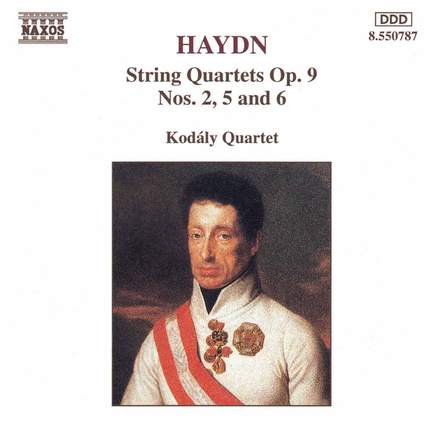
Overshadowed by four dozen later masterpieces, Haydn's Op 9 has usually received short shrift from players and commentators. The most familiar is the D minor, No 4, described by Hans Keller...
Haydn: String Quartets Op. 9 Nos. 2, 5 & 6
Kodaly Quartet
Purchase product
Overshadowed by four dozen later masterpieces, Haydn's Op 9 has usually received short shrift from players and commentators. The most familiar is the D minor, No 4, described by Hans Keller...
About
Contents and tracklist
- Kodály Quartet
- Recorded: 28-30 January 1993
- Recording Venue: Unitarian Church, Budapest
- Kodály Quartet
- Recorded: 28-30 January 1993
- Recording Venue: Unitarian Church, Budapest
- Kodály Quartet
- Recorded: 28-30 January 1993
- Recording Venue: Unitarian Church, Budapest
Awards and reviews
 2010
2010
Overshadowed by four dozen later masterpieces, Haydn's Op 9 has usually received short shrift from players and commentators. The most familiar is the D minor, No 4, described by Hans Keller as 'the first great string quartet in the history of music'. The minor mode at this period (1769-70) invariably drew something special from Haydn, and this work stands apart from the others for its intensity of expression, its mastery of texture and development and the sheer character of its ideas. The opening Allegro moderato could well have been at the back of Mozart's mind when he came to write his own great D minor Quartet, K421. The Kodály Quartet is, as ever, a sympathetic Haydn exponent, impressing with its slightly old-fashioned warmth of sonority, the natural musicality of its phrasing and care for blend, balance and intonation, though the boomy church acoustic hardly helps.

As ever they [the Kodaly Quartet] are sympathetic Haydn exponents.