Einar Englund: Orchestral Works
Niklas Sivelov (piano)
Turku Philharmonic Orchestra, Jorma Panula
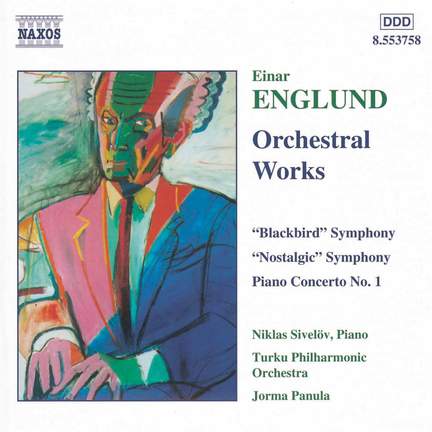
Einar Englund was the finest Finnish symphonist between Sibelius and Kokkonen, and the Blackbird Symphony is one of his best. You can hear why he so named it from the woodwind writing, particularly...
Einar Englund: Orchestral Works
Niklas Sivelov (piano)
Turku Philharmonic Orchestra, Jorma Panula
Purchase product
Einar Englund was the finest Finnish symphonist between Sibelius and Kokkonen, and the Blackbird Symphony is one of his best. You can hear why he so named it from the woodwind writing, particularly...
About
Contents and tracklist
Awards and reviews
 2010
2010
Einar Englund was the finest Finnish symphonist between Sibelius and Kokkonen, and the Blackbird Symphony is one of his best. You can hear why he so named it from the woodwind writing, particularly the solos for flute, although he grew wary of emphasising the title in later life. One of the most attractive features of all his music is its orchestration. Panula's account is superbly played, with excellent sound. The Fourth (1976), written in memory of Shostakovich, is less epic, though no less inventive. A chamber symphony for strings and percussion, its most effective movement is the sparkling but macabre Scherzo, 'Tempus fugit', haunted by the chiming of bells and the manic ticking of some outlandish clock. Here, as well as in the darkly poetic third span, 'Nostalgia', and concluding 'Epilogue', Panula finds great poetry. Naxos's centrepiece, though, is the first of Englund's two piano concertos. Englund's own recording disappeared from the catalogue long ago, but Niklas Sivelöv proves a fine advocate.
 February 2000
Excellent recordings of three of Englund's finest works, including the Blackbird Symphony, depicting the 'brutality of Man¡K compared with the purity of Nature'. Panula's account is superbly played¡K with an excellent sound. Naxos's centrepiece is the first of Englund's two piano concertos, otherwise unavailable, written for a competition in 1955- which it won. Englund's own recording disappeared from the catalogue long ago, but Niklaus Sivelov proves a fine advocate. Strongly recommended.