Mozart - Symphonies
Freiburger Barockorchester, René Jacobs
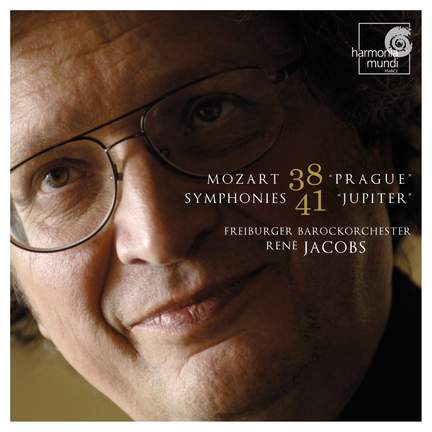
Such has been the admiration (if not always affection) for René Jacobs's Mozart operas, and so striking have been the contributions of the period orchestras involved, that it seems only natural...
Mozart - Symphonies
Freiburger Barockorchester, René Jacobs
Purchase product
Such has been the admiration (if not always affection) for René Jacobs's Mozart operas, and so striking have been the contributions of the period orchestras involved, that it seems only natural...
About
Contents and tracklist
Awards and reviews
 2010
2010
Such has been the admiration (if not always affection) for René Jacobs's Mozart operas, and so striking have been the contributions of the period orchestras involved, that it seems only natural that he should try his hand at a couple of the great man's symphonies. The results fascinate in places and infuriate in others, but never lack for talking-points.
The Jupiter is the more successful, showing the kind of 'inside-out' rethink with which Roger Norrington used to enrage and delight. The first movement is playful, with Jacobs toning down the Olympian grandeur and mischievously emphasising the buffo elements – the chuckling third theme is given the special treatment of a slower tempo and subsequent accelerando, with one statement even adorned with an exuberant upward violin slide. The slow movement, luminous and taken at a perfectly judged brisk walking pace, will be less contentious, but not so the Minuet, which races by at an initially disturbing yet ultimately exhilaratingly satisfying one-in-a-bar. After all this creative energy, the surprisingly steady finale seems to lack ideas by comparison, though its contrapuntal panache gains much from the clarity Jacobs draws from the excellent Freiburg band.
Crisp and boisterous orchestral playing likewise characterises the Prague, though here Jacobs seems to find it more difficult to find a way into the heart of the music. The first movement has a stricter pulse than in the Jupiter, and, while the development emerges as a thrilling battleground, the second subject's beautifully consoling woodwind lines are shown none of the loving tenderness they deserve. The Andante seems uncertain of its tempo (Jacobs is not the first conductor to struggle here), and the finale does not quite convince at its supersonic speed.
Nevertheless, this is an intriguing and invigorating disc; Jacobs's Jupiter, at least, qualifies as among the most thought-provoking of recent years.