George Antheil: Ballet Mecanique
Philadelphia Virtuosi Chamber Orchestra, Daniel Spalding
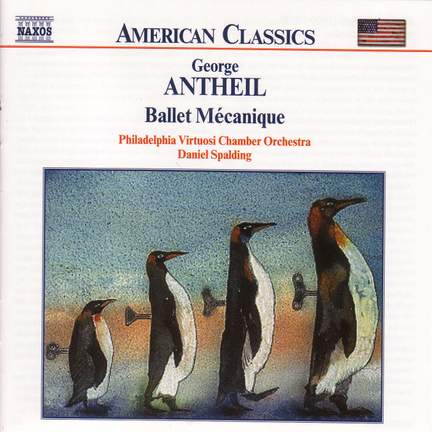
Spalding and his Philadelphians are feisty enough in the Ballet, refined and reflective in the other works. This is a great chance to check out one of the least heard but most notorious works...
George Antheil: Ballet Mecanique
Philadelphia Virtuosi Chamber Orchestra, Daniel Spalding
Purchase product
Spalding and his Philadelphians are feisty enough in the Ballet, refined and reflective in the other works. This is a great chance to check out one of the least heard but most notorious works...
About
Contents and tracklist
- Philadelphia Virtuosi Chamber Orchestra
- Daniel Spalding
- Recorded: 4th to 5th October, 1999
- Recording Venue: County Ballroom, The War Memorial, Trenton, New Jersey, USA
- Philadelphia Virtuosi Chamber Orchestra
- Daniel Spalding
- Recorded: 4th to 5th October, 1999
- Recording Venue: County Ballroom, The War Memorial, Trenton, New Jersey, USA
- Philadelphia Virtuosi Chamber Orchestra
- Daniel Spalding
- Recorded: 4th to 5th October, 1999
- Recording Venue: County Ballroom, The War Memorial, Trenton, New Jersey, USA
- Philadelphia Virtuosi Chamber Orchestra
- Daniel Spalding
- Recorded: 4th to 5th October, 1999
- Recording Venue: County Ballroom, The War Memorial, Trenton, New Jersey, USA
Awards and reviews
 20th November 2002
Spalding and his Philadelphians are feisty enough in the Ballet, refined and reflective in the other works. This is a great chance to check out one of the least heard but most notorious works of the 20th century.
 2010
2010
Although Ballet mécanique is the inevitable selling point here, the 1953 revision eschews many of the sonic and rhythmic excesses that give the work its infamy and, to be honest, its musical appeal. Spalding secures a zestful performance from the Philadelphia Virtuosi, less frenetic than the Ensemble Modern, with the interlocking ostinatos of pianos and percussion readily invoking Les noces in sound if not substance.
The other works give a good overview of Antheil's changing idiom over the greater part of his career. From 1948, the First Serenade might seem a continuation of his inter-war neoclassicism, yet the chromatic unease that permeates the brusque outer movements, and the plaintive solos and chill sul ponticelli of the Andante intimate deeper emotions. The Symphony of 1923 offers a statement of stylistic intent to rival Stravinsky's Octet, though the astringent polytonal writing is more akin to Milhaud's Chamber Symphonies. Nine years on, and the Concert finds the eclipsed composer pursuing understated yet intriguing directions.
The succession of mini-ensembles, linked by a varied ritornello for the whole group, may have its basis in Stravinsky's Symphonies of WindInstruments, but Antheil's piece is formally open-ended and emotionally anything but cathartic. Characterful and well-prepared performances, cleanly recorded, and informative notes.