Ginastera: Panambí & Estancia
Luis Gaeta (Narrator/Bass-baritone)
London Symphony Orchestra, Gisèle Ben-Dor
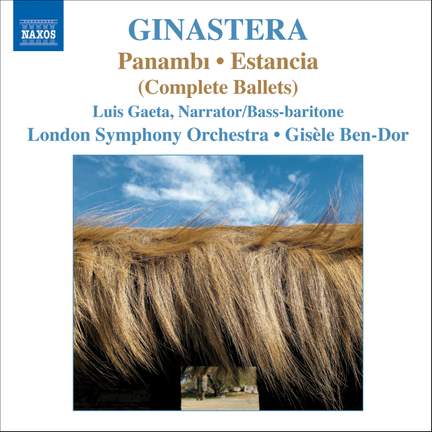
Alberto Ginastera comes over as an Argentinian Stravinsky in these two early ballets, which is by no means to denigrate their distinctively Latin American idiom. Glittering orchestration, and...
Ginastera: Panambí & Estancia
Luis Gaeta (Narrator/Bass-baritone)
London Symphony Orchestra, Gisèle Ben-Dor
Purchase product
Alberto Ginastera comes over as an Argentinian Stravinsky in these two early ballets, which is by no means to denigrate their distinctively Latin American idiom. Glittering orchestration, and...
About
Contents and tracklist
- London Symphony Orchestra
- Gisele Ben-Dor
- Recorded: 23-24 May 1997
- Recording Venue: Abbey Road Studios, London
El Hechicero se dirige hacia Guirahu (The sorcerer approaches Guirahu) - Aparecen las deidades del agua (The water sprites appear) …
Track length0:28
Reaparece el Hechicero (The sorcerer reappears) - Los gritos del Hechicero (The Sorcerer's cries)
Track length0:36
Aparicion de Tupa (Tupa appears) - Los guerreros amenazan al Hechicero (The warriors threaten the Sorcerer)
Track length0:51
- Luis Gaeta (bass-baritone)
- London Symphony Orchestra
- Gisele Ben-Dor
- Recorded: 23-24 May 1997
- Recording Venue: Abbey Road Studios, London
Los peones de hacienda - Entrada de los caballitos (The cattlemen - Entry of the foals)
Track length2:04
Awards and reviews
 April 2007
Alberto Ginastera comes over as an Argentinian Stravinsky in these two early ballets, which is by no means to denigrate their distinctively Latin American idiom. Glittering orchestration, and strong performances licensed from Conifer's original recordings.
 2010
2010
It was a characteristically bold step by the 21-yearold Ginastera to make his Op 1 an ambitiously scored orchestral ballet rather than a modest suite or chamber piece. Of course, he had written such works – mostly withdrawn and destroyed – but the one-act choreographic legend Panambí (1935-37) was several strides forward and as impressive a compositional debut as any.
Drawn from an Amerindian tribal legend, the plot concerns the love of Guirahu for the chief's daughter, Panambí, and the machinations of the local sorcerer, who also desires her. A battle between good and evil plays out across a single night, opening with wonderful, impressionistic moonlight and ending with a radiant hymn to the dawn. In between, the expertly scored music is largely restrained, though with some electrifying episodes along the way.
Panambí betrays Ginastera's formative influences clearly, The Rite of Spring and Ravel in particular. The vividly achieved, primitivist atmosphere (not unlike the music of Revueltas) necessary for the story is absent from his follow-up ballet, Estancia (1941). Some of the latter's music is so well known, thanks to the popular Suite, that it may surprise that this recording of the whole was a premiere.
Absent, too, is the self-consciousness of Panambí as a public statement; in Estancia one can hear Ginastera relax as he whips up a greater storm.
Gisèle Ben-Dor and the LSO are splendid throughout. Luis Gaeta makes a splendid soloist in Estancia. Recommended.

The performances and the recording are really first-class, defying the use of superlatives.