Arturo Toscanini
New York Philharmonic Symphony Orchestra, Arturo Toscanini
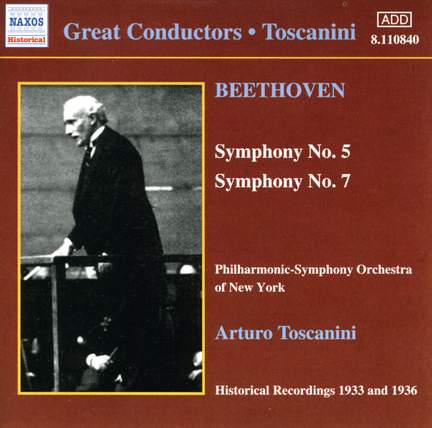
Toscanini is a near-impossible act to follow. But then in a sense he was fortunate.
He didn't have a fat record catalogue full of Rostrum Greats to live up to and he wasn't under pressure to...
Arturo Toscanini
New York Philharmonic Symphony Orchestra, Arturo Toscanini
Purchase product
Toscanini is a near-impossible act to follow. But then in a sense he was fortunate.
He didn't have a fat record catalogue full of Rostrum Greats to live up to and he wasn't under pressure to...
About
Contents and tracklist
- New York Philharmonic Symphony Orchestra
- Arturo Toscanini
- New York Philharmonic Symphony Orchestra
- Arturo Toscanini
Awards and reviews
 2010
2010
Toscanini is a near-impossible act to follow. But then in a sense he was fortunate.
He didn't have a fat record catalogue full of Rostrum Greats to live up to and he wasn't under pressure to say something new, or at least something different. On the contrary, Toscanini's avowed mission was to clean up where others had indulged in interpretative excess. And he could as well have been cleaning up for the future.
There are numerous Toscanini Fifths in public or private circulation, at least four of them dating from the 1930s. This one is lithe, dynamic and consistently commanding. Comparing it with Toscanini's 1952 NBC recording finds numberless instances where a natural easing of pace helps underline essential transitions, such as the quiet alternation of winds and strings that holds the tension at the centre of the first movement.
The glow of the string playing towards the close of the second movement has no parallel with the 1952 version and while the NBC Scherzo is better drilled, this finale really blazes.
Mark Obert-Thorn has done a first-rate job with the sound, focusing the orchestra's whispered pianissimos while keeping surface noise to a minimum.
The commercially released 1936 New York Seventh has already been hailed as a classic. As with the Fifth, Toscanini's ability to gauge pauses to the nth degree – in this case the rests that separate the finale's opening fortissimo rallying calls – is truly inimitable. The nobility and the visceral thrill of Toscanini's pre-war version remains unchallenged. The transfer is excellent.