Wagner: Götterdämmerung
Astrid Varnay, Brünnhilde, Bernd Aldenhoff, Siegfried, Hermann Uhde, Gunther, Elisabeth Höngen, Waltraute, Heinrich Pflanzl, Alberich, Ludwig Weber, Hagen, Martha Mödl, Gutrune et troisième Norne, Elisabeth Schwarzkopf, Woglinde, Hanna Ludwig, Wellgunde, Hertha Töpper, Floßhilde, Ruth Siewert, Première...
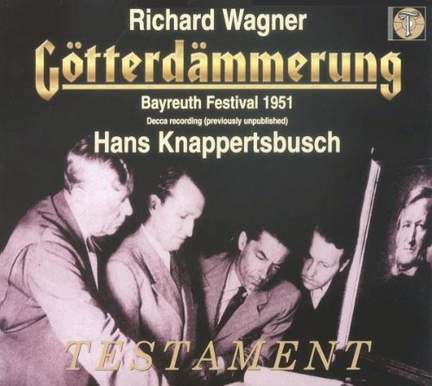
Awards:
-
Gramophone Awards, 2000, Special Achievement Award

Testament awakened this sleeping Brünnhilde after half a century in Decca's vaults, held there because of an age-old dispute over rights between that company and EMI. This is a fitting memorial,...
Wagner: Götterdämmerung
Astrid Varnay, Brünnhilde, Bernd Aldenhoff, Siegfried, Hermann Uhde, Gunther, Elisabeth Höngen, Waltraute, Heinrich Pflanzl, Alberich, Ludwig Weber, Hagen, Martha Mödl, Gutrune et troisième Norne, Elisabeth Schwarzkopf, Woglinde, Hanna Ludwig, Wellgunde, Hertha Töpper, Floßhilde, Ruth Siewert, Première...
Purchase product
Awards:
-
Gramophone Awards, 2000, Special Achievement Award
Testament awakened this sleeping Brünnhilde after half a century in Decca's vaults, held there because of an age-old dispute over rights between that company and EMI. This is a fitting memorial,...
About
Contents and tracklist
- Astrid Varnay, Brünnhilde, Bernd Aldenhoff, Siegfried, Hermann Uhde, Gunther, Elisabeth Höngen, Waltraute, Heinrich Pflanzl, Alberich, Ludwig Weber, Hagen, Martha Mödl, Gutrune et troisième Norne, Elisabeth Schwarzkopf, Woglinde, Hanna Ludwig, Wellgunde, Hertha Töpper, Floßhilde, Ruth Siewert, Première Norne, Ira Malaniuk, deuxième Norne
- Chor & Orchester der Festspiele Bayreuth
- Hans Knappertsbusch
Awards and reviews
 2010
2010
Testament awakened this sleeping Brünnhilde after half a century in Decca's vaults, held there because of an age-old dispute over rights between that company and EMI. This is a fitting memorial, alongside the exactly contemporaneous Parsifal (Teldec), to the phoenix-like reincarnation of Bayreuth post-war and to Wieland Wagner's genius as a producer and gatherer of all the talents to the Green Hill. The other hero of the occasion, as with Parsifal, is Knappertsbusch.
From the first bars of the Prologue he takes us right into the work, as concerned as three notable Norns (Mödl the most arresting of the three when prophesying the conflagration to come) with the inevitability of the tragic events portrayed within. He then takes us from Stygian gloom to mountain-top ecstasy with a masterly touch few equal. There we meet Varnay's youthful, vibrant, womanly heroine. Beside her is Aldenhoff's not-so-lovely Siegfried, yet once you become accustomed to his aggrandising, extrovert moments you hear a Heldentenor in the old mould, alive to every word and communicating with his audience. Later, arriving at Gibichung Hall, you meet the most forthright, articulate Gunther in Uhde. His greeting to Siegfried, 'Begrüsse froh, O Held', makes one realise why Uhde is pre-eminent in this role.
Beside him is Weber's louring, gloating, ambitious Hagen. What intelligence there is in every bar he sings (try 'Ein Weib weiss ich' or the whole of the Watch). As Gutrune, Mödl isn't your usual sweet-toned milksop but a women not afraid to show her deep emotions. The great mezzo Höngen as Waltraute conveys with amazing immediacy Wotan's despair, and, with a shudder in her tone at 'Da brach sich sein Blick', the tenderness of his thoughts on his beloved Brünnhilde, making one feel it to be the most moving moment in the whole Ring and consoling us for occasionally grainy tone.
Throughout Act 2, Knappertsbusch is trenchant in characterising the tremendous conflicts depicted therein. Weber rouses the vassals with vigorous enthusiasm. Varnay is tremendous in her denunciations of Siegfried, Aldenhoff as vivid in his replies. Such immediacy can only be found in the opera house – damn the momentary lapses in ensemble, the few distractions when scenery is being moved or the audience coughs.
In Act 3 the Rhine Maidens, led by Schwarzkopf, are too backwardly placed, the sole blot on the sound picture. In Siegfried's Narration, Aldenhoff captures the vitality of his earlier exploits, supported by gloriously rippling strings, and sings a fulsome death-song. Knappertsbusch, eagerly supported by Bayreuth's hand-picked orchestra (all individually named in the accompanying booklet), unleashes all the tremendous import of the Funeral March.
Finally Varnay carries all before her, in better voice than later at Bayreuth, in a visionary account of the Immolation that rightly crowns a noble interpretation of her role and the whole work. The recording is superior even to that of the 1951 Parsifal, with only a few passages of uncertain balance to fault it, supporting an experience nobody ought to miss.
 March 2012
In considering live Gotterdammerung perofrmances on CD, there is one monumental achievement and then there is everything else. I'm referring to Bayreuth 1951...If you're a Wagnerian and you don't have this in your collection, what on earth are you waiting for?