Special offer. Korngold: Die Kathrin
Melanie Diener, David Rendall, Robert Hayward, Lillian Watson & Della Jones
BBC Concert Orchestra & Singers, Martyn Brabbins
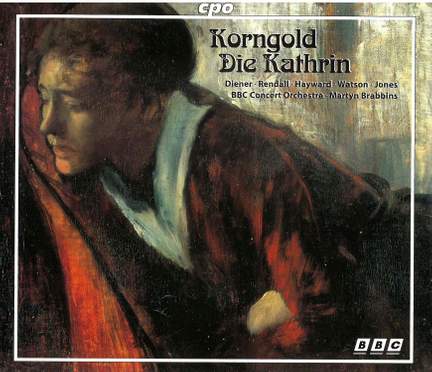
This is the first modern performance and recording of Korngold's last stage work. Die Kathrin is separated by 10 years from its predecessor, DasWunder der Heliane. Between Heliane and DieKathrin,...
Special offer. Korngold: Die Kathrin
Melanie Diener, David Rendall, Robert Hayward, Lillian Watson & Della Jones
BBC Concert Orchestra & Singers, Martyn Brabbins
Purchase product
This is the first modern performance and recording of Korngold's last stage work. Die Kathrin is separated by 10 years from its predecessor, DasWunder der Heliane. Between Heliane and DieKathrin,...
About
Contents and tracklist
Spotlight on this release
-
Erich Wolfgang Korngold
5th Dec 2014
James chooses his favourite recordings of the music of Korngold, best known for his Violin Concerto as well as numerous operas and film scores.

Awards and reviews
 2010
2010
This is the first modern performance and recording of Korngold's last stage work. Die Kathrin is separated by 10 years from its predecessor, DasWunder der Heliane. Between Heliane and DieKathrin, Korngold's career had changed. From being the wunderkind of the 1910s, he had developed into the film composer and arranger of large-scale operettas. If Heliane is the most grandiose of his operas, Die Kathrin is the most unpretentious; Korngold had thought of labelling it a folk-opera. The story is simple. The hero, François, is a singer who has been conscripted into the army. He falls in love with Kathrin, leaving her pregnant. She loses her job, follows him to Marseilles, where in a vaguely Tosca-like plot-twist François is implicated in the murder of the villain, who has actually been shot by one of the cabaret girls. Five years pass, François returns to find Kathrin and his child. The opera ends with a rapturous love duet. The music is full of typically lush Korngold scoring. In the night-club scene, obligatory in any 1930s opera, there are two catchy numbers, and Korngold brings in such fashionably jazzy instruments as a trio of saxophones and a banjo. The cast is exceptionally strong. Diener has just the right weight of voice for Kathrin, and Rendall makes François into a very positive hero.
Brabbins brings out the essentially Puccinian side of the score; in its structure the opera resembles La rondine more than a little: verismo didn't die with Turandot. Devotees of Korngold's music won't need any encouragement. Those with a taste for tuneful, Romantic opera, sometimes bordering on operetta, should give it a chance.
 1st December 2014
This is the first, and so far only, recording of Korngold's final stage work, and what a treat it is. Conductor Martyn Brabbins revels in the Puccini-like aspects of the score...Jones, and [there is] elegant playing from the BBC Concert Orchestra.