Special offer. Philippe Rogier: Magnificat
Magnificat Choir, Philip Cave
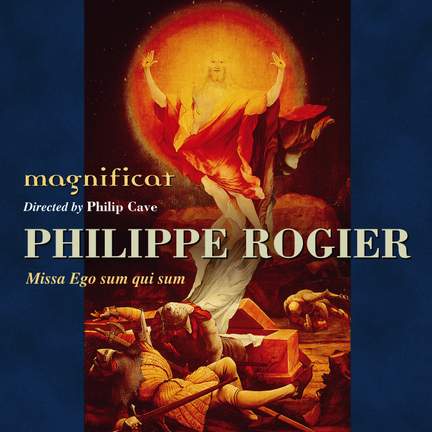
So much first-rate 16th-century music still remains unrecorded, but here's a welcome addition.
Philippe Rogier's death at the age of 35 in 1596 cut short a prolific stream of music. Worse was...
Special offer. Philippe Rogier: Magnificat
Magnificat Choir, Philip Cave
Purchase product
So much first-rate 16th-century music still remains unrecorded, but here's a welcome addition.
Philippe Rogier's death at the age of 35 in 1596 cut short a prolific stream of music. Worse was...
About
Contents and tracklist
- Magnificat
- Philip Cave
- Recorded: 6-8 April 1999
- Recording Venue: Douai Abbey, Woolhampton, United Kingdom
- Magnificat
- Philip Cave
- Recorded: 6-8 April 1999
- Recording Venue: Douai Abbey, Woolhampton, United Kingdom
- Magnificat
- Philip Cave
- Recorded: 6-8 April 1999
- Recording Venue: Douai Abbey, Woolhampton, United Kingdom
- Carolyn Sampson (soprano), Patrick Craig (alto), Matthew Beale (tenor), Tom Raskin (tenor), James Mustard (bass), Francis Steele (bass)
- Magnificat
- Philip Cave
- Recorded: 6-8 April 1999
- Recording Venue: Douai Abbey, Woolhampton, United Kingdom
- Magnificat
- Philip Cave
- Recorded: 6-8 April 1999
- Recording Venue: Douai Abbey, Woolhampton, United Kingdom
- Magnificat
- Philip Cave
- Recorded: 6-8 April 1999
- Recording Venue: Douai Abbey, Woolhampton, United Kingdom
- Magnificat
- Philip Cave
- Recorded: 6-8 April 1999
- Recording Venue: Douai Abbey, Woolhampton, United Kingdom
- Magnificat
- Philip Cave
- Recorded: 6-8 April 1999
- Recording Venue: Douai Abbey, Woolhampton, United Kingdom
Awards and reviews
 2010
2010
So much first-rate 16th-century music still remains unrecorded, but here's a welcome addition.
Philippe Rogier's death at the age of 35 in 1596 cut short a prolific stream of music. Worse was to come. In 1734 a fire destroyed the library of the Spanish royal chapel, which must have held a large number of his compositions (at the time of his death he was chief court musician to Philip II).
How large a number can be gauged from the terrible earthquake that struck Lisbon in 1755, swallowing up the royal library along with 243 works.
Today we're left with only 51, of which the present recital represents a sizeable proportion.
Rogier's music has Palestrina's imposing solidity and classical feel, but is more florid and freer in its use of dissonance. In this sense it looks forward to later Iberian music of the 17th century, achieving a sustained intensity in the motets. The Mass is a consummate demonstration, the skilful working out of a motet by Gombert, whose influence is very audible. The booklet-note rightly points out how Rogier develops his model in very different directions: the sequences that conclude most movements are persuasively managed, but sound utterly unlike Gombert.
Rogier's Mass Domine Dominus noster appears in a fine recording on Ricercar. But Magnificat's interpretation is of a different order. This is singing in the English tradition, but with greater warmth and richness than we're used to from mixed choirs of this kind. Given Rogier's predilection for fully scored writing, that richness pays dividends, as does the relatively large cast of 18 singers. Interpretation and music are well matched in more ways than one. Neither are strikingly original, but both make a striking impression.