Julia Varady - Puccini Arias
Julia Varady (soprano)
Berlin Radio Symphony Orchestra, Marcello Viotti
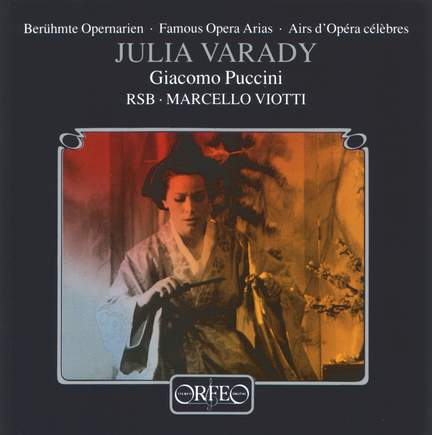
A lovely and somewhat surprising record by the most fascinating and patrician lyric soprano of the present age: 'surprising' because, though Varady is associated closely enough with Verdi, the...
Julia Varady - Puccini Arias
Julia Varady (soprano)
Berlin Radio Symphony Orchestra, Marcello Viotti
Purchase product
A lovely and somewhat surprising record by the most fascinating and patrician lyric soprano of the present age: 'surprising' because, though Varady is associated closely enough with Verdi, the...
About
Contents and tracklist
Awards and reviews
 2010
2010
A lovely and somewhat surprising record by the most fascinating and patrician lyric soprano of the present age: 'surprising' because, though Varady is associated closely enough with Verdi, the Puccini connection is less readily made, 'lovely' because the voice is still so pure, the style so musical and the response so intelligent, immediate and full-hearted. She adjusts wonderfully well to the Italian idiom, lightening the vowels, freeing the upper range, allowing more portamento than she would probably do in other music, yet employing in its use the finest technical skill and artistic judgement.
Her singing of Magda's song in La rondine opens the record and introduces a singer who sounds (give or take a little) half her actual age: Varady's début dates back to 1962. In Mimì's narrative she sings with so fine a perception of the character – the hesitancies, the joy in 'mi piaccion quelle cose' – that Schwarzkopf's exquisite recording comes to mind, just as, from time to time, and especially in the Madama Butterfly excerpts, the finely concentrated, tragic restraint of Meta Seinemeyer is recalled. It's good to hear, too, how sensitively Varady differentiates between characters, Manon Lescaut having that essential degree of additional sophistication in tone and manner. What runs as a thread through all these characterisations is a feeling for their dignity. Mimì doesn't simper. Sister Angelica doesn't sob. Lauretta has resolution in her pleading.
Butterfly, Liù and Tosca are what they should be: women whose pathos lies not in their weakness but in a passionate, single-minded fidelity. That leaves Turandot, which is a mistake.
That is, she's outside the singer's scope and should remain so: it isn't merely a matter of vocal thrust, weight and stamina, but also of voicecharacter, although the performance of her aria has clear merits. None of which should deter purchase; overall this is singing to treasure.