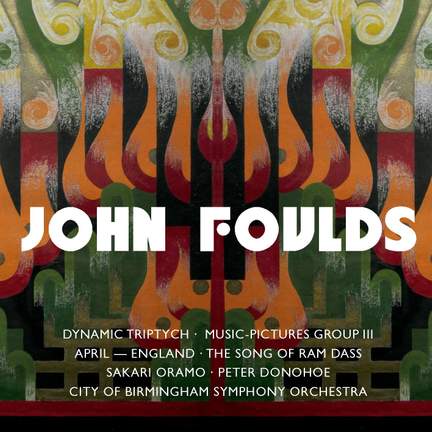
Foulds: Dynamic Triptych
Peter Donohoe (piano)
City of Birmingham Symphony Orchestra, Sakari Oramo
Awards:
-
Gramophone Magazine, June 2006, Editor's Choice

Peter Donohoe is a powerfully committed soloist, and there'll be moments in the second movement particularly which will have you catching your breath, when you realise that Foulds is already...
Foulds: Dynamic Triptych
Peter Donohoe (piano)
City of Birmingham Symphony Orchestra, Sakari Oramo
Purchase product
Awards:
-
Gramophone Magazine, June 2006, Editor's Choice
Peter Donohoe is a powerfully committed soloist, and there'll be moments in the second movement particularly which will have you catching your breath, when you realise that Foulds is already...
About
Contents and tracklist
Foulds:
Dynamic Triptych Op.88 : I Dynamic Mode
Work length8:27
This work is only available as an album download.
II Dynamic Timbre
Track length11:44
This track is only available as an album download.
III Dynamic Rhythm
Track length5:23
This track is only available as an album download.
Foulds:
Impressions of Time and Place Op.48 : I April - England
Work length8:08
This work is only available as an album download.
I The Ancient of Days
Track length5:45
This track is only available as an album download.
II Colombine
Track length3:30
This track is only available as an album download.
III Old Greek Legend
Track length6:19
This track is only available as an album download.
IV The Tocsin
Track length3:35
This track is only available as an album download.
Foulds:
Keltic Suite Op.29 : II Lament
Work length4:42
This work is only available as an album download.
Awards and reviews
-
Gramophone MagazineJune 2006Editor's Choice
 15th August 2006
Peter Donohoe is a powerfully committed soloist, and there'll be moments in the second movement particularly which will have you catching your breath, when you realise that Foulds is already beginning to occupy an orchestral soundworld that still feels modern.
 2010
2010
Extraordinary how Fould's Dynamic Triptych opens, like an unstoppable current swirling around its seven-note mode, a tightly-woven study that goes to show how, given the right composer, confined harmony can work miracles.
The slow second movement is cold but gripping, with strings that slide every now and then on a queasy bed of quarter-tones, the use of piano and timps fitfully anticipating Bartók's Second Concerto. The finale anticipates Martinu in the way that rhythmic patterns meet or converge, occasionally even Prokofiev with some brilliant running passagework from Peter Donohoe, who gives a superb performance.
April – England is an earlier piece that was later revised, spontaneous and wide-eyed à la Copland to start with then quietening for a noble, slower section in the manner of a passacaglia. The Music-Pictures Group III is earlier still (1912), the first of them prophesying the Sibelius of Tapiola with a huge climax, the mostly playful 'Columbine' featuring yet more destabilising quartertones.
The 'Old Greek Legend' has something of an Elgarian tread about it and the lively 'Tocsin' finale ends just like the 'March to the Scaffold' from the Symphonie fantastique. In fact Berlioz is probably Foulds's nearest forebear; both men relished new sounds while holding fast to key aspects of tradition, and Foulds, like Berlioz, was a pretty stunning orchestrator.
As for the gorgeous 'Keltic Lament', how Stokowski would have basked in this amazing music! But, not having Mickey's magic wand to hand, Oramo and his Birmingham players will do very nicely. This is a really first-rate programme, a worthy follow-up to Oramo's first Foulds CD (see above) and a revealing window onto an unusual and innovative area of English music.
 June 2006
…John Foulds… was… something of a musical prophet. Extraordinary how his Dynamic Triptych opens, like an unstoppable current swirling around its seven-note mode, a tightly-woven study that goes to show how, given the right composer, confined harmony can work miracles. ...Peter Donohoe... gives a superb performance. This is a really first-rate programme, a worthy follow-up to Oramo's first Foulds CD (A/04) and a revealing window onto an unusual and innovative area of English music.