Beethoven - String Quartets Volume 2
Endellion Quartet
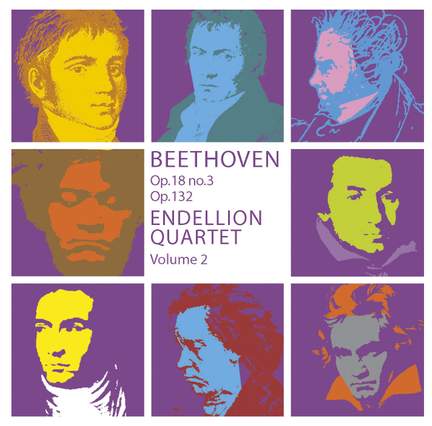
…Op. 18 No. 3… is given a performance that is both musically satisfying and technically immaculate. Op. 132 is of course a much darker work, and the Endellion's non-vibrato sound at the opening...
Beethoven - String Quartets Volume 2
Endellion Quartet
Purchase product
…Op. 18 No. 3… is given a performance that is both musically satisfying and technically immaculate. Op. 132 is of course a much darker work, and the Endellion's non-vibrato sound at the opening...
About
Contents and tracklist
Awards and reviews
 April 2006
…Op. 18 No. 3… is given a performance that is both musically satisfying and technically immaculate. Op. 132 is of course a much darker work, and the Endellion's non-vibrato sound at the opening immediately captures to perfection the music's mysterious and uncertain quality.
 2010
2010
One of the greatest moments in the classical repertoire occurs 31 bars into the slow movement of Beethoven's late A minor Quartet (that's at around 3'12" into track 7 on this particular recording). After the solemnly archaic sounds of music cast 'in the Lydian Mode', the sun suddenly breaks through, adagio molto turns to andante and the sick composer sings a prayer of thanksgiving. He'd at last recovered – and surely no music before or since so vividly expresses the sensation of an emotional weight being lifted. The Endellion Quartet do a nice job, pacing the Adagio judiciously then, come the chirping birdsong of the Andante, effortlessly easing into the new tempo. 'Nicely', but not especially movingly.
This is the second volume of the Endellions' projected complete set of the quartets (plus string quintets and fragments), conscientious playing, a little reserved at times perhaps, but musical and, at the mysterious onset of the development section of the A minor's first movement, memorable. The D major Quartet from Op 18 is another fine example of considered ensemble playing where phrases 'lift' with just the right degree of emphasis: try the sparring between paired upper and lower strings near the start of the finale. Sensible and sensitive, but not earth-shattering.
Both recordings use texts 'based on the latest research into all known surviving sources', which means mistakes put right – not big mistakes but significant notational errors.
The scholar Jonathan Del Mar offers chapter and verse in the CD booklet, and there will no doubt be some readers for whom the Urtext angle alone will make purchase mandatory.
 April 2006
…conscientious playing, a little reserved at times perhaps, but musical and, at the mysterious onset of the development section of the A minor's first movement, memorable. The D major Quartet from Op 18 is another fine example of considered ensemble playing where phrases 'lift' with just the right degree of emphasis: try the sparring between paired upper and lower strings near the start of the finale.