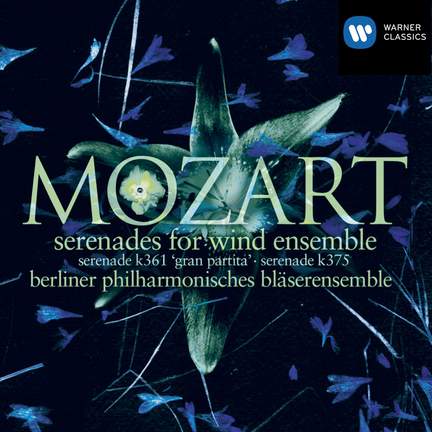
Mozart - Serenades for Wind Ensemble
Berlin Philharmonic Wind Ensemble
Awards:
-
Building a Library, October 2019, Recommended Recording

Mozart's great wind serenades are well served on CD, with particularly fine performances of the grandest of them all the so-called Gran Partita, K361. This new version from the Berlin Philharmonic...
Mozart - Serenades for Wind Ensemble
Berlin Philharmonic Wind Ensemble
Purchase product
Awards:
-
Building a Library, October 2019, Recommended Recording
Mozart's great wind serenades are well served on CD, with particularly fine performances of the grandest of them all the so-called Gran Partita, K361. This new version from the Berlin Philharmonic...
About
Contents and tracklist
- Berliner Philharmonisches Bläserensemble
- Berliner Philharmonisches Bläserensemble
Awards and reviews
 April 2006
Mozart's great wind serenades are well served on CD, with particularly fine performances of the grandest of them all the so-called Gran Partita, K361. This new version from the Berlin Philharmonic wind players is perhaps the most impressive yet, equally capturing both the music's irrepressible high spirits and its sensuousness.
 2010
2010
A challenge for any group performing Mozart's great wind serenades is finding a happy balance between a euphonious ensemble blend and pungent individual characterisation. In both works here – the so-called Gran partita for 12 wind instruments plus double bass, and the E flat Serenade K375 – the princely Berlin Philharmonic Wind Ensemble achieve this beautifully.
The players respond exuberantly to the rustic elements of K375 – the two jaunty minuets and the bubbly finale, with its gleeful exchanges between the instruments. But their immaculately tuned performance is even more remarkable for its subtlety and poetic shaping, whether in the first movement (done quite spaciously, in keeping with its maestoso marking), the melancholy C minor Trio of the first Minuet (magical soft horn playing here) or the rapt Adagio.
The Berliners are truly athletic and ebullient in the first movement of the Gran partita, yet never underestimate its symphonic import. As in K375, the instrumental interplay is managed with delightful elegance and ease. There's a crucial sense of fun, too, in the rollicking finale, with the players adding cheeky touches of ornamentation and tellingly varying the dynamics on repeats.
Characterisation is just as apt and imaginative in the other movements. The two minuets are sharply contrasted in tempo, the first quite stately (yet with an underlying urgency in the haunting G minor trio), the second briskly bucolic, with a relaxed swing to its Ländler second Trio. The dulcet outer sections of the Romanze are offset by an unusually mysterious, disquieting C minor central Allegretto, held down to piano, as Mozart asks; and the variations in the sixth movement are full of felicities, from the frolicking first variation to the ravishing fifth, where the first oboe sings with vocal eloquence against softly lulling basset-horns and clarinets. Here and elsewhere the players get the often tricky instrumental balances exactly right; and thanks, too, to EMI's beautifully judged recording inner details of part writing – especially from the bassoons – that usually go for little or nothing register perfectly.
 May 2006
The players respond exuberantly to the rustic elements of K375 - the two jaunty minuets and the bubbly finale, with its gleeful exchanges between the instruments. But their immaculately tuned performance is even more remarkable for its subtlety and poetic shaping... The Berliners are more athletic and ebullient in the first movement of the Gran partita... There's a crucial sense of fun, too, in the rollicking finale, with the players adding cheeky touches of ornamentation and tellingly varying the dynamics on repeats.