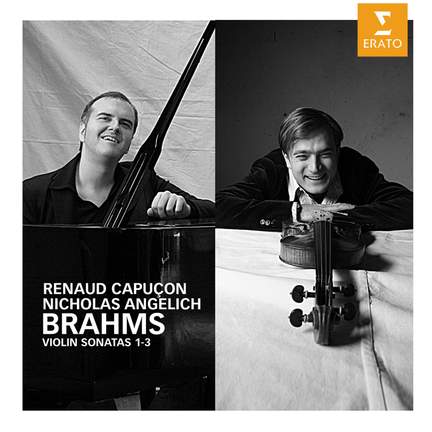
Special offer. Brahms: Violin Sonatas Nos. 1-3
Renaud Capucon (violin) & Nicholas Angelich (piano)
Awards:
-
Gramophone Magazine, November 2005, Editor's Choice

…I enjoyed the A major, and was even more enthused by the D minor. …Capuçon and Nicholas Angelich are absolutely inside the music, completely responsive to the play of expressive light and...
Special offer. Brahms: Violin Sonatas Nos. 1-3
Renaud Capucon (violin) & Nicholas Angelich (piano)
Purchase product
Awards:
-
Gramophone Magazine, November 2005, Editor's Choice
…I enjoyed the A major, and was even more enthused by the D minor. …Capuçon and Nicholas Angelich are absolutely inside the music, completely responsive to the play of expressive light and...
About
Contents and tracklist
Work length28:36
This work is only available as an album download.
- Nicholas Angelich (piano), Renaud Capuçon (violin)
- Recorded: 2005-05-31
- Recording Venue: May 2005. Lugano, Swizerland.
I. Vivace ma non troppo
Track length11:32
This track is only available as an album download.
Awards and reviews
-
Gramophone MagazineNovember 2005Editor's Choice
 October 2005
…I enjoyed the A major, and was even more enthused by the D minor. …Capuçon and Nicholas Angelich are absolutely inside the music, completely responsive to the play of expressive light and shade, and the way this goes hand in glove with the unmatched intricacy and vitality of Brahms's rhythmic sense.
 2010
2010
Capuçon and Angelich make a wonderfully well-matched team, with a command of genuine rubato (pressing forward in order to make room for subsequent holding back) that gives a truly authentic impression. Each detail of the music is expressively convincing: it seems that it's a priority for Angelich and Capuçon to feel the music. This can lead them sometimes to go against Brahms's expressed intentions. The theme at 3'18" in the first movement of Op 78 is marked to be in tempo (after a ritardando) but here the speed suddenly becomes faster, the dynamic much louder than the written pianissimo.
Similarly, in the Presto agitato finale of Op 108 the quieter passages are taken more slowly.
These are occasional lapses: overall the performances are beautifully considered, tending towards an expansive, romantic view of Brahms, but with a care for balance and proportion. The FAE Scherzo, for example, has all the necessary youthful exuberance, but it's coupled with a fine feeling for balance between the parts and for rhythmic character. And, throughout, there's a magnificent sense of line: Capuçon plays the great G-string melodies in Op 108's Adagio and Op 100's finale with rich, opulent sound but his vibrato is never too prominent – the most important thing is the shape of the melody.