Serebrier conducts Tchaikovsky
Music inspired by Shakespeare's plays
Bamberger Symphoniker, José Serebrier
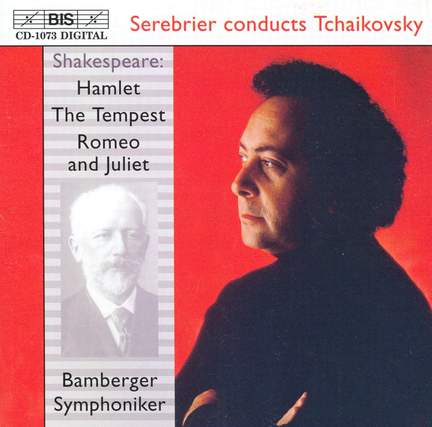
What a good idea to couple Tchaikovsky's three fantasy overtures inspired by Shakespeare. José Serebrier writes an illuminating note on the genesis of each of the three, together with an analysis...
Serebrier conducts Tchaikovsky
Music inspired by Shakespeare's plays
Bamberger Symphoniker, José Serebrier
Purchase product
What a good idea to couple Tchaikovsky's three fantasy overtures inspired by Shakespeare. José Serebrier writes an illuminating note on the genesis of each of the three, together with an analysis...
About
Contents and tracklist
Work length18:35
Hamlet, Op. 67
Track length18:35
Work length21:58
The Tempest - Symphonic fantasy overture, Op. 18
Track length21:58
Work length21:14
Romeo and Juliet Fantasy Overture (3rd version, 1880) [1880 Version]
Track length21:14
Awards and reviews
 2010
2010
What a good idea to couple Tchaikovsky's three fantasy overtures inspired by Shakespeare. José Serebrier writes an illuminating note on the genesis of each of the three, together with an analysis of their structure. He notes that once Tchaikovsky had established his concept of the fantasy overture in the first version of Romeo andJuliet in 1869 – slow introduction leading to alternating fast and slow sections, with slow coda – he used it again both in the 1812 Overture and Hamlet. The Tempest (1873) has similarly contrasting sections, but begins and ends with a gently evocative seascape, with shimmering arpeggios from strings divided in 13 parts.
It's typical of Serebrier's performance that he makes that effect sound so fresh and original. In many ways, early as it is, this is stylistically the most radical of the three overtures here, with sharp echoes of Berlioz in some of the woodwind effects. The clarity of Serebrier's performance, both in texture and in structure, helps to bring that out, as does a warm and analytical BIS recording.
Hamlet, dating from much later, is treated to a similarly fresh and dramatic reading, with Serebrier bringing out the yearningly Russian flavour of the lovely oboe theme representing Ophelia. He may not quite match the thrusting power of his mentor, Stokowski, but he's not far short, and brings out far more detail.
Serebrier is also meticulous in seeking to observe the dynamic markings in each score.
Those in The Tempest are nothing if not extravagant – up to a fortissimo of five fs in the final statement of the love theme – yet Serebrier graduates the extremes with great care. Highly recommended.