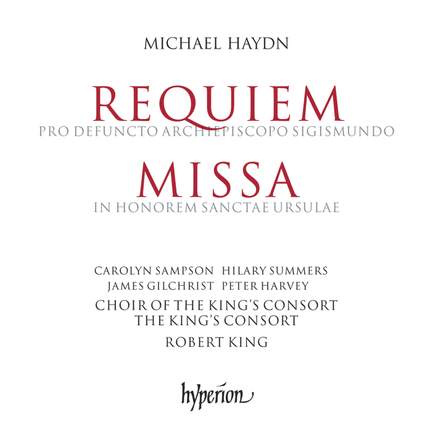
Michael Haydn: Requiem
Carolyn Sampson (soprano), Hilary Summers (alto), James Gilchrist (tenor), Peter Harvey (bass)
Choir of The King’s Consort, The King’s Consort, Robert King
Awards:
-
Gramophone Magazine, June 2005, Editor's Choice

A quality quartet of soloists, led by the vernal soprano of Carolyn Sampson.
Michael Haydn: Requiem
Carolyn Sampson (soprano), Hilary Summers (alto), James Gilchrist (tenor), Peter Harvey (bass)
Choir of The King’s Consort, The King’s Consort, Robert King
Purchase product
Awards:
-
Gramophone Magazine, June 2005, Editor's Choice
A quality quartet of soloists, led by the vernal soprano of Carolyn Sampson.
About
The Kings Consorts latest foray into the studio brings us a thrilling new recording of Michael Haydns Requiem, and reveals the little-known St Ursula Mass to be a truly exceptional work. The Requiem was composed in response to tragedy, the death of Haydns patronthe Prince-Archbishop of Salzburgproviding the official cloak for an outpouring of grief as much inspired by the death of the composers infant daughter. In itself the work is a memorable and confident example of the genre, but its deserved fame has been somewhat eclipsed by the many striking similarities between the Haydn and Mozart Requiems; when Wolfgang Amadeus composed what was to be his lastand most famouswork a full twenty years after Haydns memorial to the archbishop had been first performed, he doubtless intended it as the highest of praise to his friend that he borrowed melodies, rhythms, scoring, structure Such points of musicological interest must no longer be allowed to obscure the worth of the Haydns original magnum opus. Some three dozen Mass-settings by Michael Haydn survive. The Missa in honorem Sanctae Ursula (also known as the Chiemsee-Messe) currently rests in relative obscurity, being performed rarely and hardly touched in the recording studio. And yet Robert King, his choir, soloists and orchestra here demonstrate this to be a work of great beauty and intense power, with a place both in the liturgy and as a showcase for excellent performances.
Contents and tracklist
Awards and reviews
-
Gramophone MagazineJune 2005Editor's Choice
 March 2006
A quality quartet of soloists, led by the vernal soprano of Carolyn Sampson.
 2010
2010
Robert King suggests that Michael Haydn's Requiem of 1771 for the Archbishop-Prince of Salzburg reflects a personal outpouring of grief for the loss of Haydn's beloved patron and the recent death of his infant daughter. The fervent expressions of grief, consolation and hope must have made some impression on the 15-year-old Mozart. A comparison with Mozart's Requiem setting of 20 years later is inevitable: Haydn didn't give his solo quartet anything that compares with the immediacy of Mozart's 'Tuba mirum', but the older man's masterful choral writing, brilliant orchestral scoring and sensitive use of solo voices created plenty of musical riches and dramatic moods, such as the brooding Kyrie and the bursting energy of the 'Dies irae'.
The quartet of soloists is impeccable; the choir and orchestra of The King's Consort prove to be increasingly assured and dynamic with each recording released. Robert King's measured and emphatic direction makes it easy to appreciate why the Requiem was performed at his brother Joseph's funeral in 1809.
His interpretation of the sunnier, extrovert Missa in honorem Sanctae Ursulae (1793) helps the music to sound natural and spontaneous. In some respects the Mass is an even finer composition, full of charismatic and inventive musical charms (it's worth buying for Carolyn Sampson's ravishing 'Benedictus' alone).
Anybody who enjoys the choral works of Mozart and Joseph Haydn will be delighted by this double-disc set, and will probably concur that Michael Haydn's neglect in the shadow of his younger friend and older brother is substantially corrected by these exquisite performances.