Special offer. Vivaldi: Ottone in Villa
Susan Gritton, Monica Groop, Nancy Argenta, Mark Padmore, Sophie Daneman
Collegium Musicum 90, Richard Hickox
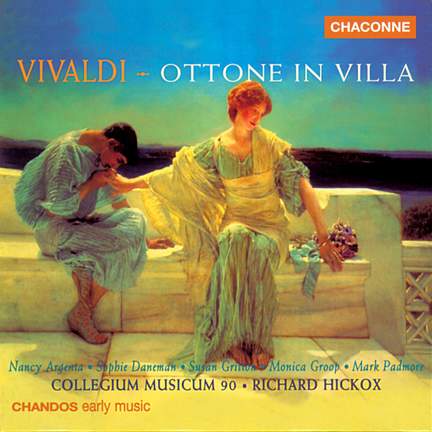
This, Vivaldi's very first opera, was premièred in Vicenza in 1713 and was an instant hit. The story is a relatively uncomplicated one by the standards of Baroque opera, of amatory pretences...
Special offer. Vivaldi: Ottone in Villa
Susan Gritton, Monica Groop, Nancy Argenta, Mark Padmore, Sophie Daneman
Collegium Musicum 90, Richard Hickox
Purchase product
This, Vivaldi's very first opera, was premièred in Vicenza in 1713 and was an instant hit. The story is a relatively uncomplicated one by the standards of Baroque opera, of amatory pretences...
About
Contents and tracklist
Act I Scene 1: Recitative: Nacqui a gran sorte … (I was born to greatness … ) (Cleonilla) - Aria: Quanto m'alletta (How alluring) (Cleonilla)
Track length5:34
Act I Scene 2: Recitative: Caio … (Caio … ) (Cleonilla, Caio) - Aria: Sole degl'occhi miei (Light of my eyes) (Caio) - Recitative: Ma Cesare qui vien … (But here comes Caesar … ) (Caio, Cleonilla)
Track length4:21
Act I Scene 3: Recitative: Cleonilla, a te ne vengo … (Cleonilla, I come to you … ) (Ottone, Cleonilla, Caio) - Aria: Caro bene (Beloved) (Cleonilla)
Track length5:24
Act I Scene 4: Recitative: Piu fido amante, e chi miro giammai? … (Has there ever been a truer lover? … ) (Ottone, Caio) - Aria: Par tormento, ed e piacer (It seems a torment yet is a pleasure) (Ottone)
Track length4:32
Act I Scene 5: Recitative: Quanto di donna amante … (Just how cunnning a mistress can be … ) (Caio, Tullia) - Aria: Chi seguir vuol la costanza (He who insists on being constant) (Caio)
Track length5:17
Act I Scene 6: Recitative: Ah! Traditor t'intendo … (Ah! Traitor, I know what's in your mind … ) (Tullia) - Aria: Con l'amor di donna amante (My love, being that of a loving woman) (Tullia)
Track length4:23
Act I Scene 7: Recitative: Quanto m'alletti, o cara … (How I love, my dearest … ) (Ottone, Cleonilla, Decio) - Aria: Frema pur, si lagni Roma (Let Rome fret and fume) (Ottone)
Track length5:12
Act I Scene 8: Recitative: Grande ho, Decio, il desio … (I am extremely curious to know, Decio … ) (Cleonilla, Decio, Tullia) - Aria: Il tuo pensiero e lusinghiero (You are living in a fool's paradise) (Decio)
Track length3:46
Act I Scene 9: Recitative: Porgimi il manto, caro … (Hand me my robe, dear boy … ) (Cleonilla, Tullia) - Aria: Che fe, che amor (I swear that faith, that love) (Cleonilla)
Track length5:26
Act I Scene 10: Recitative: E Caio aborriro per fin ch'io viva? … (Hold Caio in abhorrence for as long as I live? … ) (Caio, Tullia) - Aria: Si, si, deggio partir (Yes, yes, I must be off) (Tullia)
Track length3:04
Act I Scene 11: Recitative: E Caio aborriro per fin ch'io viva? … (Hold Caio in abhorrence for as long as I live? … ) (Caio) - Aria: Gelosia (Jealousy) (Caio)
Track length3:53
Act II Scene 1: Recitative: Spinto Signor son' io … (I am urged, my lord … ) (Decio, Ottone) - Aria: Come l'onda (Like a wave) (Ottone)
Track length5:31
Act II Scene 2: Recitative: A Cesare tradito io dir non volli … (I decided not to tell the deceived Caesar … ) (Deccio, Caio) - Aria: Che giova it trono al Re (What good is his throne to a king) (Decio)
Track length4:15
Act II Scene 3: Recitative: Parli Decio che vuol … (Decio can say what he likes … ) (Caio, Tullia) - Aria: L'ombre, l'aure, e ancora il rio (The shadows, the breezes, and even the stream) (Caio, Tullia)
Track length10:22
Act II Scene 4: Recitative: Qual duolo, o Caio, frenetico ti rende? … (What grief, O Caio, has provoked this frenzy? … ) (Tullia, Caio) - Aria: Su gl'occhi del tuo ben (To your beloved) (Caio)
Track length3:03
Act II Scene 5: Recitative: Disperato e l'infido … (The deceiver is desperate … ) (Tullia) - Aria: Due tiranni ho nel mio cor[e] (Two tyrants have I in my heart) (Tullia)
Track length4:40
Act II Scene 6: Recitative: Felice e il volto mio … (My face looks happy … ) (Cleonilla, Caio) - Aria: Leggi almeno, tiranna infedele (Read at least, O faithless tyrant) (Caio)
Track length7:25
Act II Scene 7: Recitative: Che mai scrisse qui Caio? … (Whatever has Caio written here? … ) (Cleonilla, Ottone) - Aria: Tu vedrai (You shall see) (Cleonilla)
Track length5:52
Act II Scene 8: Recitative: Cesare, io gia prevedo … (Caesar, I foresee … ) (Decio, Ottone, Cleonilla) - Aria: Povera fedelta (Poor constancy) (Cleonilla)
Track length2:49
Act II Scene 9: Recitative: Ah Decio, i tuio ricordi … (Ah Decio, your report … ) (Ottone, Decio) - Aria: Ben talor favella il Cielo (Very often heaven speaks) (Decio)
Track length3:28
Act II Scene 10: Recitative: Oh! qual error fec'io … (Oh, how mistaken I was … ) (Ottone, Caio) - Aria: Compatisco il tuo fiero tormento (I sympathise with your great grief) (Ottone)
Track length6:39
Act II Scene 11: Recitative: Quanto Cleonilla e scaltra … (How shrewd Cleonilla is! … ) (Caio) - Aria: Io sembro appunto (I am just) (Caio)
Track length3:52
Act II Scene 12: Recitative: Ah, che non vuol sentirmi il traditore … (Ah, the deceiver will not listen to me … ) (Tullia) - Aria: Misero spirto mio (My suffering spirit) (Tullia)
Track length4:50
Act III Scene 1: Recitative: Signor … (My lord … ) (Decio, Ottone) - Aria: Tutto sprezzo, e trono, e impero (I care for nothing, not my throne nor empire) (Ottone)
Track length4:17
Act III Scene 2: Recitative: Gia di Ottone preveggo … (I foresee Ottone's … ) (Decio) - Aria: L'esser amante (To be a lover) (Decio)
Track length4:27
Act III Scene 3: Recitative: Cerchi in van ch'io t'ascolti … (I am deaf to your pleas … ) (Cleonilla, Caio) - Aria: No, per te non ho piu amor, no (No, I no longer love you, no) (Cleonilla)
Track length2:25
Act III Scene 4: Recitative: Cleonilla … (Cleonilla … ) (Tullia, Caio, Cleonilla) - Aria: Guarda in quest'occhi (Look into my eyes, and hear) (Caio)
Track length6:38
Act III Scene 5: Recitative: Quant'ha di vago Amor nel suo gran regno … (All the charms that Love possesses … ) (Cleonilla, Tullia) - Aria: Che bel contento (What sweet contentment) (Tullia)
Track length2:38
Act III Scene 6: Recitative: Piu soffrir non poss'io … (I can bear this no longer … ) (Caio, Cleonilla, Tullia)
Track length0:38
Act III Final Scene: Recitative: Caio infierito … (Caio in a rage … ) (Ottone, Decio, Cleonilla, Caio, Tullia)
Track length4:02
Awards and reviews
 2010
2010
This, Vivaldi's very first opera, was premièred in Vicenza in 1713 and was an instant hit. The story is a relatively uncomplicated one by the standards of Baroque opera, of amatory pretences and misunderstandings: it has been admirably summarised by Eric Cross (who has edited the work) as a 'light-weight, amoral entertainment in which the flirtatious Cleonilla consistently has the upper hand, and gullible Emperor Ottone (a far from heroic figure) never discovers the truth about the way he has been deceived'. The score proceeds in a succession of secco recitatives (with just a very occasional accompagnato) and da capo arias – which the present cast ornament very stylishly.
There are no duets or ensembles except for a perfunctory final chorus in which the characters merely sing in unison; but there's an abundance of tuneful arias, and when Vivaldi can be bothered to write proper accompaniments to them – he often merely has violins doubling the voice, plus a bass line – he can provide interesting imitative counterpoint. Several arias employ only the upper strings without cello and bass except in ritornellos. The small Vicenza theatre couldn't afford star singers, so only limited opportunities were provided for vocal virtuosity; but the present cast makes the most of its opportunities, both in display and in meditative mood. It isn't always easy to tell the three sopranos apart, but Susan Gritton well suggests the scheming minx Cleonilla; Nancy Argenta with her bright voice has the castrato role that includes several fine arias, and displays a messa di voce in an echo aria; and Sophie Daneman, in a breeches role, produces a wide range of colour. Monica Groop slightly undercharacterises Ottone except when roused to dismiss Rome's anxiety at his dalliance. It's quite a relief to ear one male voice, and Mark Padmore is excellent. Richard Hickox keeps a firm rhythmic hand on everything and delivers quite the best and neatest Vivaldi operatic recording yet.