Jean-Baptiste Lully - Grands Motets
Amel Brahim-Djelloul (soprano), Damien Guillon (alto), Howard Crook (tenor), Hervé Lamy (tenor), Arnaud Marzorati (bass-baritone)
Les Pages et les Chantres, Musica Florea, Olivier Schneebeli
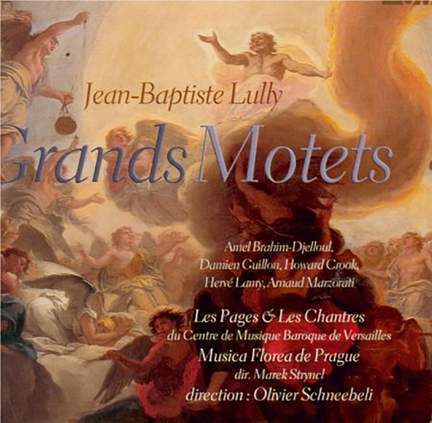
Grands motets, requiring lavish vocal and instrumental resources, always signalled important occasions at the French court.
Until the advent of public concerts in Paris in the 1720s they were...
Jean-Baptiste Lully - Grands Motets
Amel Brahim-Djelloul (soprano), Damien Guillon (alto), Howard Crook (tenor), Hervé Lamy (tenor), Arnaud Marzorati (bass-baritone)
Les Pages et les Chantres, Musica Florea, Olivier Schneebeli
Purchase product
Grands motets, requiring lavish vocal and instrumental resources, always signalled important occasions at the French court.
Until the advent of public concerts in Paris in the 1720s they were...
About
Contents and tracklist
- Amel Brahim-Djelloul, Howard Crook, Damien Guillon, Hervé Lamy, Arnaud Marzorati
- Les Pages, Les Chantres, Musica Florea
- Olivier Schneebeli
- Amel Brahim-Djelloul, Howard Crook, Damien Guillon, Hervé Lamy, Arnaud Marzorati, Sarah Szlakmann
- Les Pages, Les Chantres, Musica Florea
- Olivier Schneebeli
- Howard Crook, Amel Brahim-Djelloul, Damien Guillon, Hervé Lamy, Arnaud Marzorati, Sarah Szlakmann
- Les Pages, Les Chantres, Musica Florea
- Olivier Schneebeli
- Amel Brahim-Djelloul, Howard Crook, Damien Guillon, Hervé Lamy, Arnaud Marzorati
- Les Pages, Les Chantres, Musica Florea
- Olivier Schneebeli
Awards and reviews
 2010
2010
Grands motets, requiring lavish vocal and instrumental resources, always signalled important occasions at the French court.
Until the advent of public concerts in Paris in the 1720s they were performed exclusively by the king's musicians for the court. Olivier Schneebeli has assembled an admirable survey of these large-scale settings of psalm texts, which were excerpted and arranged to convey doubles entendres flattering to Louis XIV and his policies. The music employs an orchestra with a full continuo complement, a choir and a petit choeur of soloists that relies on high male voices. The only concession to modern times is the use of sopranos instead of castrati in the top part and the inclusion of girls among the pages.
The survey begins with Lully's first grandmotet, the Jubilate Deo (1660), celebrating both the marriage of the king and a peace treaty. The Miserere (1663), frequently performed during Lully's lifetime, has remained his best-known work. Quare fremuerunt (1685) was composed at a difficult time, when he most needed to please the king. From first to last, one can easily hear the ways in which Lully experimented with his forces, refining the role of the orchestra, the ways in which the soloists relate to the choir, and how he was influenced by his experience of opera.
The singers are attentive to Schneebeli's direction; the five soloists contribute singly, in dialogue with one another and in concert with the choir. Musica Florea's sweet sound suggests a refreshing departure from current ideas of Lullian style.