Fauré: Complete Works for Cello
Steven Isserlis (celllo), Pascal Devoyon (piano), with David Waterman (cello)
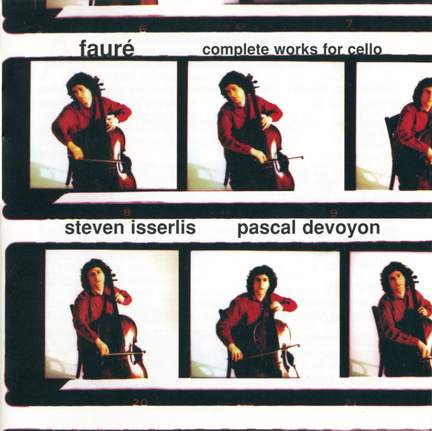
This, surely, is the most 'complete' of Fauré's complete works for cello yet to appear. Isserlis has unearthed the original version of the Romance, Op 69 (entitled Andante), with a sustained,...
Fauré: Complete Works for Cello
Steven Isserlis (celllo), Pascal Devoyon (piano), with David Waterman (cello)
Purchase product
This, surely, is the most 'complete' of Fauré's complete works for cello yet to appear. Isserlis has unearthed the original version of the Romance, Op 69 (entitled Andante), with a sustained,...
About
Contents and tracklist
- Steven Isserlis (cello), Pascal Devoyon (piano)
- Steven Isserlis (cello), Pascal Devoyon (piano)
- Steven Isserlis (cello), Pascal Devoyon (piano)
- Pascal Devoyon (piano), Steven Isserlis (cello), David Waterman (cello)
- Steven Isserlis (cello), Pascal Devoyon (piano)
- Steven Isserlis (cello), Pascal Devoyon (piano)
- Steven Isserlis (cello), Pascal Devoyon (piano)
- Steven Isserlis (cello), Pascal Devoyon (piano)
Awards and reviews
 2010
2010
This, surely, is the most 'complete' of Fauré's complete works for cello yet to appear. Isserlis has unearthed the original version of the Romance, Op 69 (entitled Andante), with a sustained, chordal accompaniment for organ in place of the piano's broken chordal semiquavers, and a gracious flourish from the cello by way of adieu. Mystically accompanied by Francis Grier at the organ of Eton College Chapel, the cello's song, restored to the church, seems to acquire more depth.
In the more familiar version of this work, as throughout the disc, Pascal Devoyon is a partner in a thousand, keenly aware of Isserlis's respect for the 'discretion, reticence and restraint' once hailed as the hallmarks of Fauré's style. In fact only in the noble Elégie do we discover the full breadth and richness of this cello's (a 1745 Guadagnini) tonal range.
A world war, plus the private trauma of incipient deafness, helps to explain the yawning gulf between the miniatures and the two sonatas of 1918 and 1922. Skipping through the score of the First you notice that only once does Fauré use a dynamic marking above forte, relying on the word espressivo to elicit just that little extra intensity at moments of climax. This is appreciated by both artists, most movingly in the central Andante. In the first movement, however, it's Devoyon's piquant accentuation that brings home the music's menace. The urgency and Elégie-evoking heart-throb of the G minor work again benefit from the immediacy of keyboard characterisation, and the variety of keyboard colour, underpinning this poetically introspective cellist's fine-spun line.