Der Turken Anmarsch
John Holloway, Aloysia Assenbaum & Lars Ulrik Mortensen
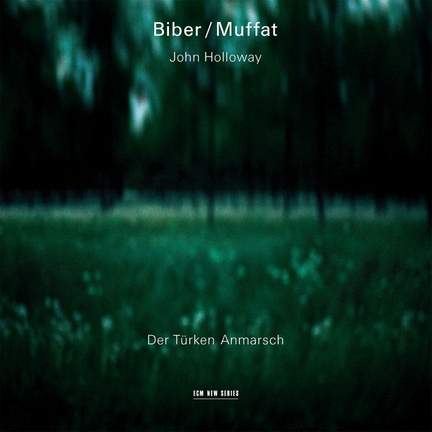
Awards:
-
Gramophone Magazine, March 2005, Editor's Choice

John Holloway plays four sonatas from the set of eight Biber published in 1681 and also dedicated to the archbishop. First, however, comes a curiosity: an adaptation by Andreas Anton Schmelzer...
Der Turken Anmarsch
John Holloway, Aloysia Assenbaum & Lars Ulrik Mortensen
Purchase product
Awards:
-
Gramophone Magazine, March 2005, Editor's Choice
John Holloway plays four sonatas from the set of eight Biber published in 1681 and also dedicated to the archbishop. First, however, comes a curiosity: an adaptation by Andreas Anton Schmelzer...
About
Contents and tracklist
- John Holloway (violin), Aloysia Assenbaum-Holloway (organ), Lars Ulrik Mortensen (harpsichord)
- Recorded: 2002-07-17
- Recording Venue: Propstei St. Gerold
- John Holloway (violin)
- Recorded: 2002-07-17
- Recording Venue: Propstei St. Gerold
- John Holloway (violin), Aloysia Assenbaum-Holloway (organ), Lars Ulrik Mortensen (harpsichord)
- Recorded: 2002-07-17
- Recording Venue: Propstei St. Gerold
Awards and reviews
-
Gramophone MagazineMarch 2005Editor's Choice
 2010
2010
John Holloway plays four sonatas from the set of eight Biber published in 1681 and also dedicated to the archbishop. First, however, comes a curiosity: an adaptation by Andreas Anton Schmelzer (son of the better-known Johann Heinrich) of Biber's 'Crucifixion' sonata, transposed up a tone and retitled as a representation of the siege of Vienna in 1683. It's difficult, though, to detect any difference other than some small changes to the Praeludium and an extra movement at the end.
The 1681 sonatas show Biber's propensity for rhapsodic flights over a pedal point and for variations on a ground bass. In the imitative writing of No 8, the double-stopping is so skilfully done that it's hard to believe that Holloway hasn't cloned himself. In this sonata especially, there's some nicely pointed continuo playing. The Muffat is a sonata da chiesa, with a return to the first movement at the end. Here and throughout the disc Holloway plays with a most appealing warmth and a faultless technique.