Milhaud: Chamber Music with Viola
Paul Cortese (viola), Michel Wagemans (piano), Joaquín Palomares (violin), Frank Schaffer (cello)
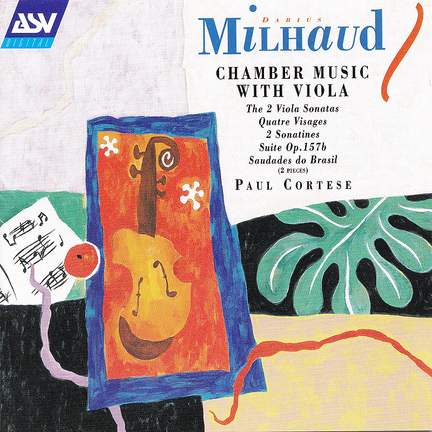
Paul Cortese here brings his rich, warm tone and flawless technique to Milhaud's viola music. Of the seven works presented here, four were written in the 1940s while Milhaud was teaching at...
Milhaud: Chamber Music with Viola
Paul Cortese (viola), Michel Wagemans (piano), Joaquín Palomares (violin), Frank Schaffer (cello)
Purchase product
Paul Cortese here brings his rich, warm tone and flawless technique to Milhaud's viola music. Of the seven works presented here, four were written in the 1940s while Milhaud was teaching at...
About
Contents and tracklist
- Paul Cortese (viola), Michel Wagemans (piano)
- Recorded: 1997-09-17
- Recording Venue: St. Silas Church, London
- Paul Cortese (viola), Michel Wagemans (piano)
- Recorded: 1997-09-17
- Recording Venue: St. Silas Church, London
- Paul Cortese (viola), Michel Wagemans (piano)
- Recorded: 1997-09-17
- Recording Venue: St. Silas Church, London
- Paul Cortese (viola), Frank Schaffer (cello)
- Recorded: 1997-09-17
- Recording Venue: St. Silas Church, London
- Joaquin Palomares (violin), Paul Cortese (viola)
- Recorded: 1997-09-17
- Recording Venue: St. Silas Church, London
- Joaquin Palomares (violin), Paul Cortese (viola), Michel Wagemans (piano)
- Recorded: 1997-09-17
- Recording Venue: St. Silas Church, London
- Paul Cortese (viola), Michel Wagemans (piano)
- Recorded: 1997-09-17
- Recording Venue: St. Silas Church, London
Awards and reviews
 2010
2010
Paul Cortese here brings his rich, warm tone and flawless technique to Milhaud's viola music. Of the seven works presented here, four were written in the 1940s while Milhaud was teaching at Mills College in the USA. Exceptions are the two arrangements from the early Saudades do Brasil; the Suite (which includes a jaunty Provençal- flavoured overture, and an engagingly cheery finale); and the much later Sonatine for violin and cello, which contains an unexpectedly emotional slow movement. Of the four other works, the Sonatine is easy-flowing small-talk, unmemorable save for the energetic final fugue; Quatre Visages, however, reveals Milhaud's sly wit in its characterisations of four women – a sunnily contented Californian, a chatterbox from Wisconsin, an earnest creature from Brussels and a vivacious Parisienne. The First Viola Sonata is one of his most endearing works, indulging to the full his penchant for canonic writing. The Second Sonata is less overtly bracing; its central Modéré is charged with expressive drama, while the finale is a rough-and-tumble which tempts Michel Wagemans, alert as he is, into being too loud for his partner – as he sometimes is elsewhere, notably in the early Suite.