Tavener - New Choral Works
Polyphony, Stephen Layton
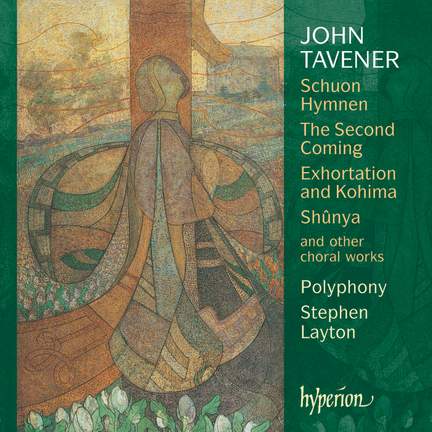
…there's no doubt about the quality of the performances. Tavener finds devoted interpreters in Polyphony who produce some of the most beautiful choral singing you could ever hope to hear....
Tavener - New Choral Works
Polyphony, Stephen Layton
Purchase product
…there's no doubt about the quality of the performances. Tavener finds devoted interpreters in Polyphony who produce some of the most beautiful choral singing you could ever hope to hear....
About
Hyperions Record of the Month for September brings us some astonishingly fresh new compositions from Sir John Tavener. Moving away from the Greek Orthodox rites which have infused so much of his recent output, Taveners inspiration now embraces the metaphysicalin both text and musical responsewith remarkable results. The Second Coming, for example, sets words by W B Yeats in an outpouring of expectation and drama. The three newest worksButterfly Dreams, Schuon Hymnen and Shnya, all written in 2003are representative of a new phase in Taveners work which has reached its climax thus far in the seven-hour-long Veil of the Temple (to be performed under Stephen Layton at this years BBC Proms). Butterfly Dreams may initially appear to be a secular work, yet the composer himself regards it as sacred, butterflies in this context being seen as symbols and even vehicles for the sacred. Schuon Hymnen, setting the words of Sufi sheikh, artist and metaphysician Frithjof Schuon, is a mantra-like Hymn to the Virgin, while Shnyawritten for Stephen Laytonis an extended meditation on the Buddhist ideal of emptiness (shnya); minimal influence from Western tonality here visits the world of Tibetan monks, the sonic halo of the temple bowl (a kind of gong) invoking an ecstatic evocation of eternity. As one who has slept, an Easter anthem and the earliest work on this disc, comes from the end of that compositional phase which saw such Tavener favourites as the Song for Athene (performed at Princess Dianas funeral), and itself deserves to become a part of the core repertory. With no fewer than six premire recordings, this disc is essential listening.
Contents and tracklist
Awards and reviews
 November 2004
…there's no doubt about the quality of the performances. Tavener finds devoted interpreters in Polyphony who produce some of the most beautiful choral singing you could ever hope to hear. And all is captured in a glowing recording.
 2010
2010
As One Who Has Slept, the earliest work here, represents Tavener's most musically ascetic period, which, by 1996 was drawing to a close. The mesmeric use of dronelike chords behind and beyond the melodic lines reassures and comforts the listener during this portrait of Christ's harrowing of hell. He soon returned to a warmer palette and a wider range of techniques. In Birthday Sleep and The BridalChamber (1999) hymn-like tunes still predominate, but the voices move more independently, the harmonies are richer.
The 2001 setting of Yeats's The Second Coming is full of skilfully realised, dramatically startling gestures, but the mood is quizzical where it should describe fear-threaded apprehension, bombastic where it should be aghast with dismay.
Finally, a group of pieces completed in 2003. In Butterfly Dreams, a set of miniatures, form and content are better matched. Parts of SchuonHymnen, especially the writing for solo soprano (a glittering, heart-lifting performance by Amy Haworth) suggests music from 1950s sci-fi films: as with those films, it's easy to see how the effects are achieved, yet somehow the magic survives. Exhortation and Kohima achieves a Tudoresque splendour, while Shûnya adds elements of Buddhist ritual to the mix.