Karajan conducts Tchaikovsky
Sviatoslav Richter, Christian Ferras, Mstislav Rostropovich
Berliner Philharmoniker, Herbert von Karajan
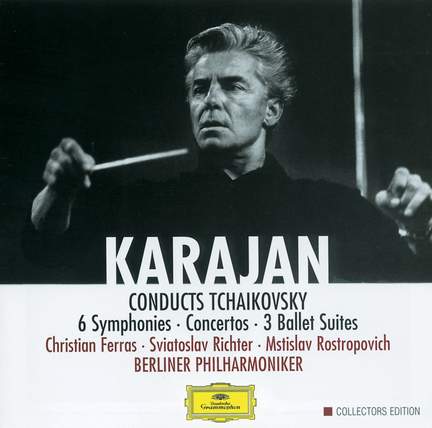
Karajan was unquestionably a great Tchaikovsky conductor. Yet although he recorded the last three symphonies many times, he did not turn to the first three until the end of the 1970s, and then...
Karajan conducts Tchaikovsky
Sviatoslav Richter, Christian Ferras, Mstislav Rostropovich
Berliner Philharmoniker, Herbert von Karajan
Purchase product
Karajan was unquestionably a great Tchaikovsky conductor. Yet although he recorded the last three symphonies many times, he did not turn to the first three until the end of the 1970s, and then...
About
Contents and tracklist
- Berliner Philharmoniker
- Herbert von Karajan
- Recorded: 1977-12-09
- Recording Venue: Philharmonie, Berlin
- Berliner Philharmoniker
- Herbert von Karajan
- Recorded: 1970-12-29
- Recording Venue: Jesus-Christus-Kirche, Berlin
- Berliner Philharmoniker
- Herbert von Karajan
- Recorded: 1970-12-29
- Recording Venue: Jesus-Christus-Kirche, Berlin
- Berliner Philharmoniker
- Herbert von Karajan
- Recorded: 1966-10-12
- Recording Venue: Jesus-Christus-Kirche, Berlin
- Berliner Philharmoniker
- Herbert von Karajan
- Recorded: 1979-01-25
- Recording Venue: Philharmonie, Berlin
- Serge Jaroff (chorus master)
- Berliner Philharmoniker, Don Kosaken Chor
- Herbert von Karajan
- Recorded: 1966-12-29
- Recording Venue: Jesus-Christus-Kirche, Berlin
- Berliner Philharmoniker
- Herbert von Karajan
- Recorded: 1979-01-29
- Recording Venue: Philharmonie, Berlin
- Berliner Philharmoniker
- Herbert von Karajan
- Recorded: 1966-10-13
- Recording Venue: Jesus-Christus-Kirche, Berlin
- Berliner Philharmoniker
- Herbert von Karajan
- Recorded: 1966-10-07
- Recording Venue: Jesus-Christus-Kirche, Berlin
1. Andante sostenuto - Moderato con anima - Moderato assai, quasi Andante - Allegro vivo
Track length17:42
- Mstislav Rostropovich (cello)
- Berliner Philharmoniker
- Herbert von Karajan
- Recorded: 1968-09-21
- Recording Venue: Jesus-Christus-Kirche, Berlin
- Berliner Philharmoniker
- Herbert von Karajan
- Recorded: 1965-09-22
- Recording Venue: Jesus-Christus-Kirche, Berlin
- Berliner Philharmoniker
- Herbert von Karajan
- Recorded: 1980-09-21
- Recording Venue: Philharmonie, Berlin
- Berliner Philharmoniker
- Herbert von Karajan
- Recorded: 1964-02-11
- Recording Venue: Jesus-Christus-Kirche, Berlin
- Berliner Philharmoniker
- Herbert von Karajan
- Recorded: 1966-10-12
- Recording Venue: Jesus-Christus-Kirche, Berlin
- Berliner Philharmoniker
- Herbert von Karajan
- Recorded: 1971-01-04
- Recording Venue: Jesus-Christus-Kirche, Berlin
- Michel Schwalbé (violin)
- Berliner Philharmoniker
- Herbert von Karajan
- Recorded: 1971-01-04
- Recording Venue: Jesus-Christus-Kirche, Berlin
- Berliner Philharmoniker
- Herbert von Karajan
- Recorded: 1966-10-13
- Recording Venue: Jesus-Christus-Kirche, Berlin
- Sviatoslav Richter (piano)
- Wiener Symphoniker
- Herbert von Karajan
- Recorded: 1962-09-24
- Recording Venue: Musikvereinssaal, Vienna
- Christian Ferras (violin)
- Berliner Philharmoniker
- Herbert von Karajan
- Recorded: 1965-11-06
- Recording Venue: Jesus-Christus-Kirche, Berlin
Awards and reviews
 2010
2010
Karajan was unquestionably a great Tchaikovsky conductor. Yet although he recorded the last three symphonies many times, he did not turn to the first three until the end of the 1970s, and then proved an outstanding advocate. In the Mendelssohnian opening movement of the First, the tempo may be brisk, but the music's full charm is displayed and the melancholy of the Andante is touchingly caught. Again at the opening of the Little Russian (No 2), horn and bassoon capture that special Russian colouring, as they do in the engaging Andantino marziale, and the crisp articulation in the first movement allegro is bracing.
The sheer refinement of the orchestral playing in the scherzos of all three symphonies is a delight, and finales have great zest with splendid bite and precision in the fugato passages and a convincing closing peroration.
The so-called Polish Symphony (No 3) is the least tractable of the canon, but again Karajan's apt tempos and the precision of ensemble makes the first movement a resounding success. The Alla tedesca brings a hint of Brahms, but the Slavic dolour of the Andante elegiaco is unmistakeable and its climax blooms rapturously. No doubt the reason these early symphonies sound so fresh is because the Berlin orchestra was not over-familiar with them, and clearly enjoyed playing them. The sound throughout is excellent.
It gets noticeably fiercer in the Fourth Symphony, recorded a decade earlier, but is still well balanced. The first movement has a compulsive forward thrust, and the breakneck finale is viscerally thrilling. The slow movement is beautifully played but just a trifle bland. Overall, though, this is impressive and satisfying, especially the riveting close.
DG has chosen the 1965 recording of the Fifth, rather than the mid-'70s version, and they were right to do so. It's marvellously recorded (in the Jesus-Christus Kirche): the sound has all the richness and depth one could ask and the performance too is one of Karajan's very finest. There's some indulgence of the second-subject string melody of the first movement. But the slow movement is gloriously played from the horn solo onwards, and the second re-entry of the Fate theme is so dramatic that it almost makes one jump. The delightful Waltz brings the kind of elegant warmth and detail from the violins that's a BPO speciality, and the finale, while not rushed Mravinsky fashion, still carries all before it and has power and dignity at the close.
The Pathétique was a very special work for Karajan (as it was for the Berlin Philharmonic) and his 1964 performance is one of his greatest recordings. The reading as a whole avoids hysteria, yet the resolution of the passionate climax of the first movement sends shivers down the spine, while the finale has a comparable eloquence, and the March/Scherzo, with ensemble wonderfully crisp and biting, brings an almost demonic power to the coda. Again the sound is excellent, full-bodied in the strings and with plenty of sonority for the trombones.
The String Serenade is digital, brightly recorded in the Philharmonie in 1980, but naturally balanced.
Marvellous playing. The Waltz, with a most felicitous control of rubato, is the highlight, and the Elégie is certainly ardent; and if the first movement could have been more neatly articulated, the finale has tremendous bustle and energy. As for the concertante works, the account of the glorious Rococo Variations with Rostropovich is another classic of the gramophone, even though it uses the truncated score. The First Piano Concerto is a disappointment, with Richter and Karajan failing to strike sparks as a part- nership. In spite of brilliant solo playing, the first movement lacks supporting tension in the orchestra, and in the finale you can sense Richter wanting to press forward, while Karajan seems to hold back: the coda itself hangs fire in the orchestra. Similarly Ferras was not an ideal choice for the Violin Concerto. Not all will take to his somewhat febrile timbre, with its touches of near-schmaltz. But the performance as a whole works better than the Piano Concerto.
Romeo and Juliet is finely done, passionate and dramatic, if not quite so spontaneously inspired as Karajan's early VPO version for Decca, especially at the opening. But Marche slave, ideally paced, is very successful, sombre and exciting by turns. Capriccio italien and 1812 are both brilliantly played, and the triptych of ballet suites can be recommended almost without reservation, with the Sleeping Beauty suite memorable for some very exciting climaxes.
Even with the reservations about the two concertos, this bargain box is a fine investment, and certainly value for money. The documentation is excellent.