Brahms: Symphony No. 1 & Schumann: No. 1
Berliner Philharmoniker, Herbert von Karajan
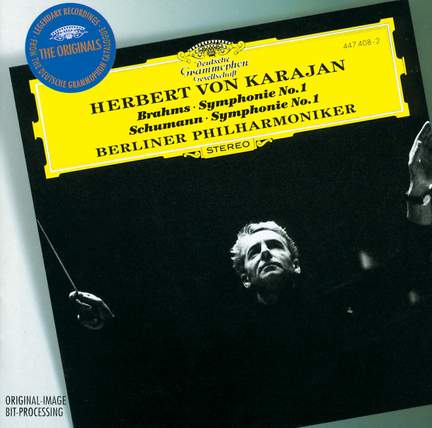
The first of Karajan's three Berlin Brahms cycles was, by general consent, his finest for DG.
Which was his finest 'phase' in general, only time will tell. Few would deny that this C minor Symphony...
Brahms: Symphony No. 1 & Schumann: No. 1
Berliner Philharmoniker, Herbert von Karajan
Purchase product
The first of Karajan's three Berlin Brahms cycles was, by general consent, his finest for DG.
Which was his finest 'phase' in general, only time will tell. Few would deny that this C minor Symphony...
About
Contents and tracklist
- Michel Schwalbé (violin)
- Berliner Philharmoniker
- Herbert von Karajan
- Recorded: 1963-10-12
- Recording Venue: Jesus-Christus-Kirche, Berlin
- Berliner Philharmoniker
- Herbert von Karajan
- Recorded: 1971-01-08
- Recording Venue: Jesus-Christus-Kirche, Berlin
Awards and reviews
 2010
2010
The first of Karajan's three Berlin Brahms cycles was, by general consent, his finest for DG.
Which was his finest 'phase' in general, only time will tell. Few would deny that this C minor Symphony has a 'halcyon days' feel. It's certainly present in the first two movements, the drive established in the main Allegro of the first (no repeat) allowing Karajan to relax for the second theme without loss of purpose. The second movement, ideally mobile, evolves freely and seamlessly, with masterfully graded wide dynamic contrasts felt rather than fashioned.
This orchestra's tone production is even, rich and rounded. So far, so good. In the third movement bar-by-bar dynamic contrasts are smoothed out, with the route to the Trio's climax taken as one very gradual crescendo. The finale's 'daybreak' is broad and awe-inspiring.
Karajan here has gauged tempo, dynamics and accentuation so the strings can articulate without strain; all very impressive, but his Allegro's progress is thus relatively short on attack, energy and the ability to fly.
The more you hear Karajan's Schumann First Symphony, the more convinced you may be that it's spring cultivated and monitored under laboratory conditions. The most unsettling of those conditions is an effect common to a number of his 1970s DG Berlin recordings, namely, for a fairly closely balanced orchestra (particularly the strings, which aren't entirely glare-free), as dynamic levels drop, to walk off several paces into a glowing Berlin sunset. This also exaggerates the conductor's own contrasts, neither exactly redolent of the vitality and freshness of spring: the resolutely robust and measured delivery of the rustic forte, and the carefully crafted confection of his dolce piano.